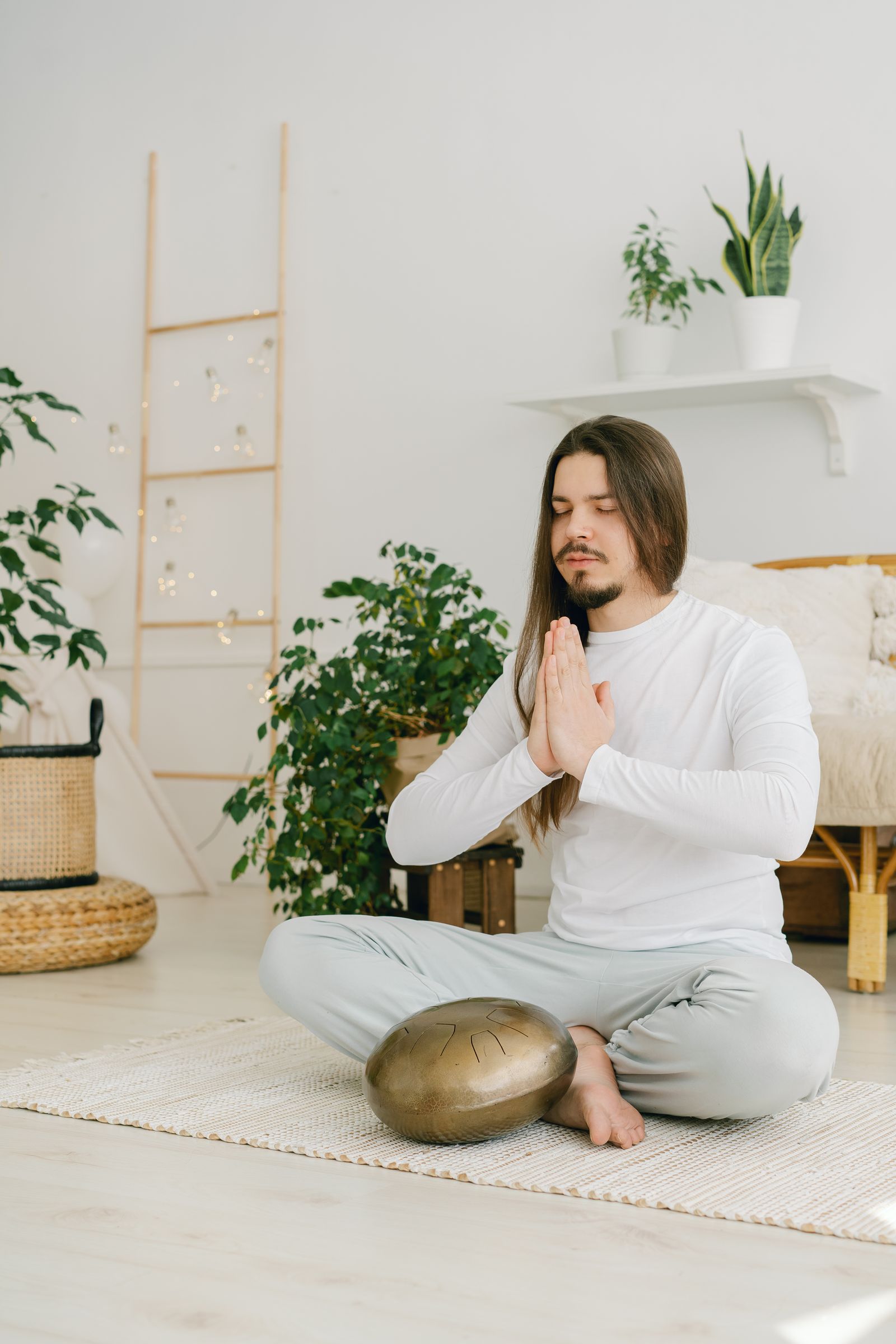
Breathwork has become one of the most searched-for wellness practices recently, and unlike a lot of trending wellness terms, this one holds up under scrutiny — controlled breathing genuinely does influence your nervous system's stress response, and yogic tradition has a long history of specific techniques for it. Here are a few accessible ones.
Why breath affects stress specifically
Your breathing pattern and your nervous system are directly linked — slow, deep breathing signals safety to your body, while short, shallow breathing signals threat. This isn't just a mental trick; it's a physiological lever you can pull consciously, which is part of why breathwork has moved from niche practice to mainstream stress-management tool.
Simple techniques to try
Extended exhale breathing. Breathe in for a count of four, out for a count of six or eight — making the exhale longer than the inhale is the single most reliable way to calm the body quickly. Do this for two to three minutes when stress spikes.
Box breathing. Inhale for four counts, hold for four, exhale for four, hold for four. The structure itself gives the mind something to focus on, which helps interrupt anxious thought loops.
Alternate nostril breathing (Nadi Shodhana). Using your thumb and ring finger to alternate closing one nostril at a time while breathing slowly through the other, this traditional pranayama technique is often described as balancing and calming — a good option when you have a few uninterrupted minutes.
Humming breath (Bhramari). Inhale normally, then exhale while making a low humming sound. The vibration itself has a noticeably calming effect for many people, and it's a technique you can do almost anywhere without drawing much attention.
How this differs from more intensive breathwork
These techniques are calming and grounding — the goal is to lower activation, not build it. This is distinct from more vigorous practices like Kundalini activation breathwork, which uses faster, more energizing breath patterns specifically to build toward release rather than calm. Both are valid; they're simply aimed at different outcomes.
When to use these
- Before a stressful meeting or conversation
- During a moment of acute anxiety or overwhelm
- As a wind-down practice before sleep
- Anytime you notice shallow, rapid breathing and want to consciously shift it
A note on limits
Breathwork is a genuinely useful tool for everyday stress, but it isn't a substitute for treatment of a diagnosed anxiety disorder or other mental health condition — if stress is a persistent, significant issue for you, these techniques are worth using alongside professional support, not instead of it.
Ready When You Are
Want to experience guided breathwork as part of a full retreat program? See what's included at each retreat length or explore the 3-Day Island Reset.