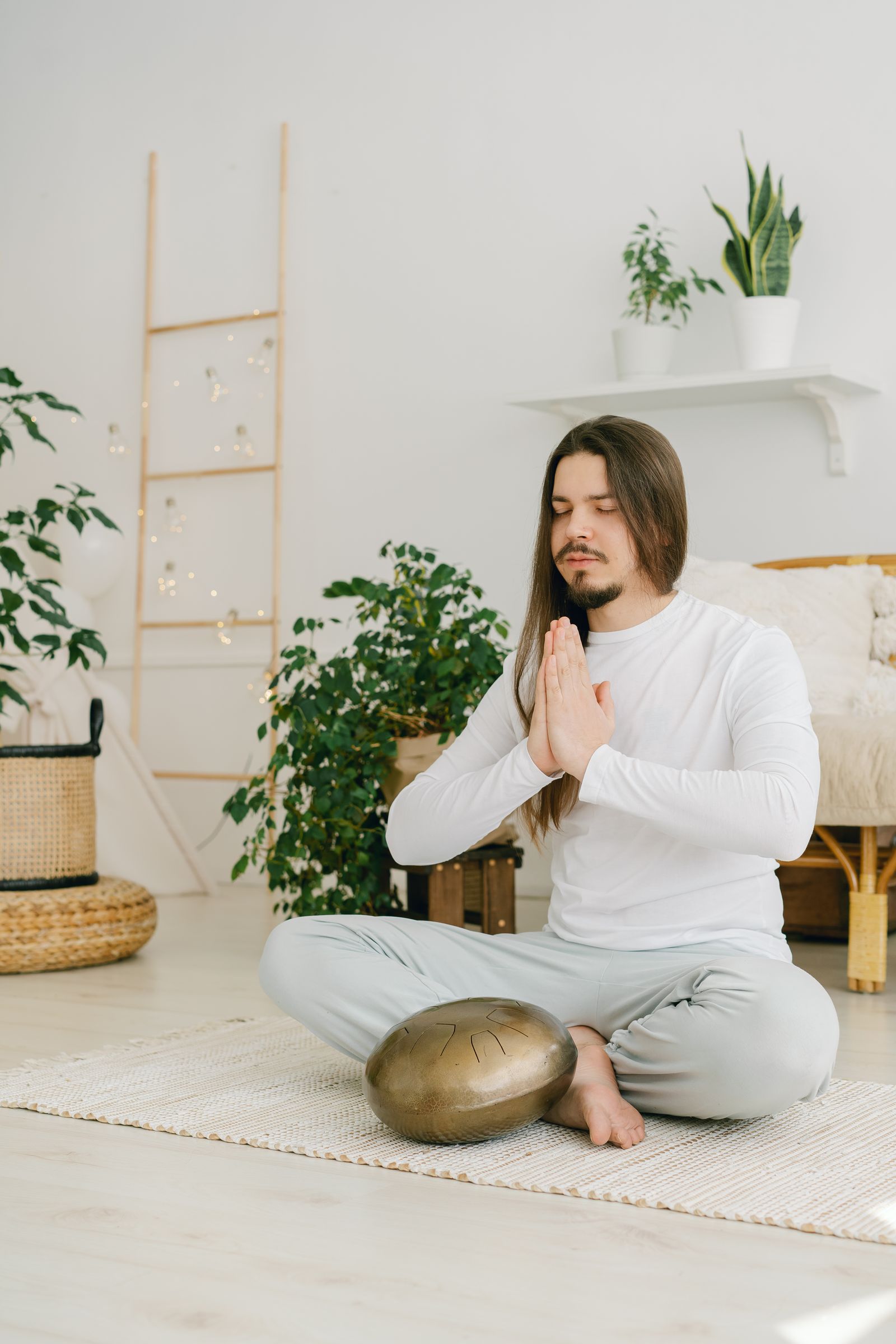
"Breathwork" has become the umbrella term in modern wellness spaces, while "pranayama" is the older, more specific word from yogic tradition. They overlap substantially, but they're not quite interchangeable, and knowing the distinction helps set the right expectations for a session labeled either way.
What pranayama specifically refers to
Pranayama is a formal branch of yogic practice — a defined set of breath control techniques (like Nadi Shodhana, or alternate nostril breathing, and Kapalabhati, a rapid cleansing breath) developed within a specific philosophical framework, traditionally practiced alongside postures and meditation as part of a complete yoga path. Pranayama techniques tend to be precise: specific counts, specific nostril or throat positioning, specific sequencing.
What "breathwork" covers more broadly
Breathwork is a modern, broader umbrella that includes traditional pranayama techniques but also incorporates approaches developed outside yogic tradition entirely — holotropic breathing, various trauma-informed breathing protocols, and more free-form, less codified breath practices designed to elicit strong emotional or physiological release. Breathwork sessions are often more intense and less structured around precise counts than classical pranayama.
Where they overlap
Both use conscious control of breath to influence mental and physical state. Both include calming techniques (extended exhales, alternate nostril breathing) as well as more energizing ones (rapid, forceful breathing patterns). The line between "pranayama" and "breathwork" in a practical retreat session is often more about labeling and lineage than a hard functional difference.
Where they diverge
Pranayama, in its traditional context, is one part of a larger philosophical system — it's meant to prepare the body and mind for meditation, not simply to produce a physical sensation. Modern breathwork is frequently presented on its own, detached from that broader framework, and is often oriented more directly toward emotional release or altered states as the primary goal.
What this means for a session at a retreat
At Inward Action, sessions draw on both traditions — grounded pranayama techniques for calming and centering, alongside more intensive breathwork approaches (particularly within Kundalini activation) aimed at release. You don't need to know which label technically applies to what's happening in a given session; the facilitator's guidance matters more than the terminology.
A simple way to think about it
If a technique has a specific traditional name, a defined counting pattern, and roots in classical yoga, it's likely pranayama. If it's more free-form, intensity-driven, and aimed at emotional release without a strict traditional structure, it's more likely being used in the modern "breathwork" sense. Both are legitimate, and most retreat programs — including this one — draw on elements of each.
Ready When You Are
Curious how breathwork fits into a full retreat day? See what each session includes or explore the 3-Day Island Reset.