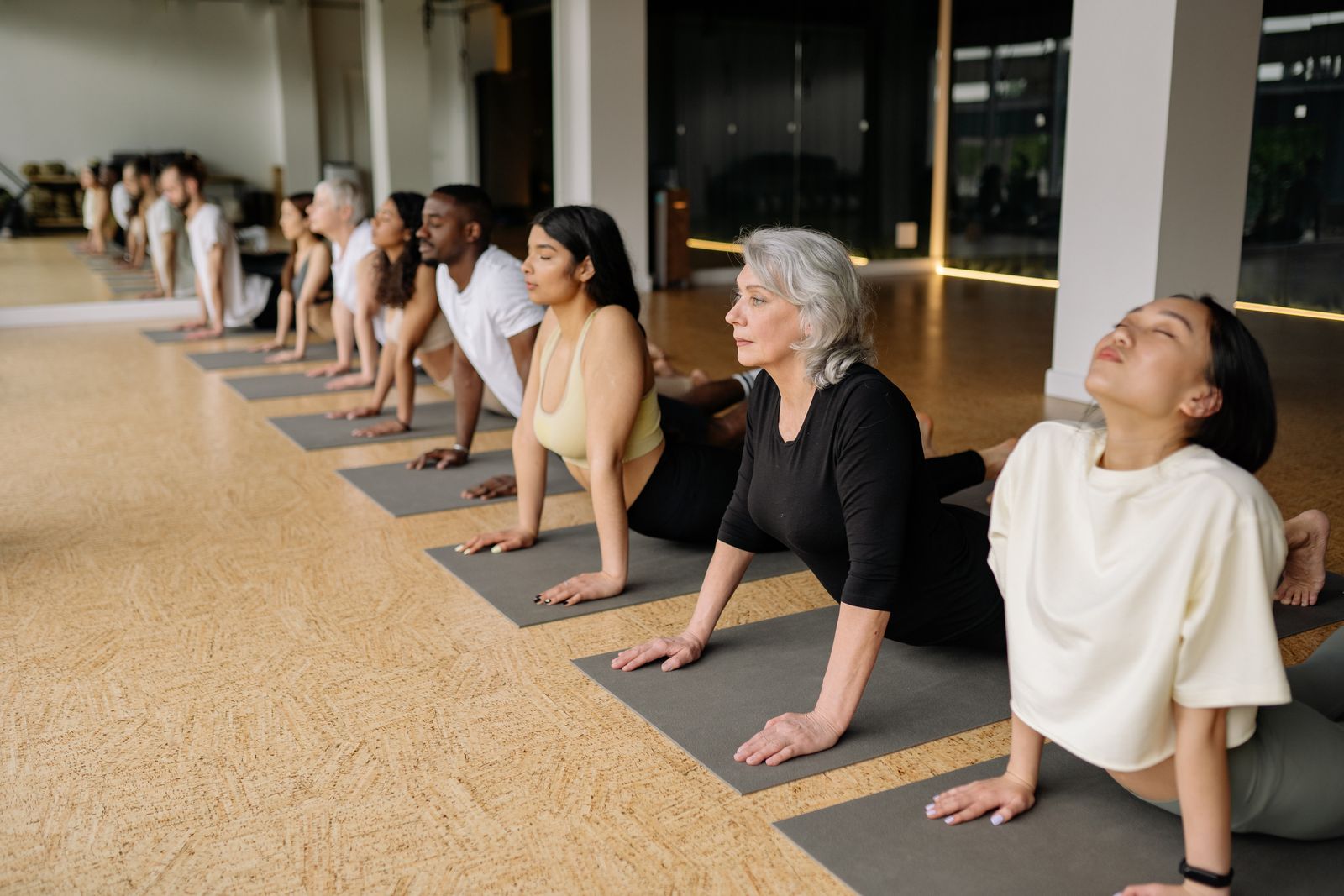
If you've seen both terms on a retreat schedule and weren't sure what actually separates them, the short version is pace and structure — Hatha is slower and more foundational, Vinyasa is more dynamic and flow-based. Neither is more "advanced" than the other; they simply train different things.
What Hatha yoga actually is
Hatha, broadly, refers to physical yoga practice in general, but in a class or retreat context it usually means a slower-paced session where postures are held for longer, with more attention to alignment and breath in each individual pose. There's less continuous movement between postures — more static holding, more time to actually settle into a shape and notice what it feels like.
What Vinyasa yoga actually is
Vinyasa links postures together through continuous movement, coordinated closely with breath — you might flow from one pose into the next on a single inhale or exhale, building a sequence rather than holding discrete shapes. It tends to feel more like a moving meditation, with a more cardiovascular, dynamic quality than Hatha.
The practical difference in a session
- Pace: Hatha is slower and more deliberate; Vinyasa moves continuously
- Intensity: Vinyasa tends to build more heat and physical exertion; Hatha is generally gentler on the body
- Focus: Hatha emphasizes alignment and stillness within a pose; Vinyasa emphasizes transition and breath-linked movement
- Accessibility: Both suit beginners, but Hatha is often considered a gentler entry point specifically because of its slower pace
Why this matters for a retreat setting
A sunrise practice on a beach or island setting often leans toward Hatha or a Hatha-influenced style — the slower pace suits an early morning, less rushed atmosphere, and it's more accessible for guests without prior yoga experience who are also managing early wake-ups, warmer climates, and generally more physical activity throughout the retreat day. A pure Vinyasa flow, while valuable, demands more physical output that some guests may prefer to save for later in the day.
Which one should you look for if you're a beginner?
If you've never done yoga before, Hatha-style sessions are generally the gentler starting point — more time to understand alignment, less pressure to keep pace with continuous movement. That said, a well-taught Vinyasa class can also work for beginners if the pace is adjusted; the key factor is really the instructor's approach, not the style label alone.
What to expect at Inward Action
Morning sessions here generally draw on a Hatha-influenced approach — accessible, unhurried, suited to sunrise timing and to guests across all experience levels — rather than a fast-paced Vinyasa flow, which fits the retreat's broader emphasis on presence and pacing over physical intensity.
Ready When You Are
Curious what a typical morning practice looks like? See the full retreat day structure or explore the 3-Day Island Reset.