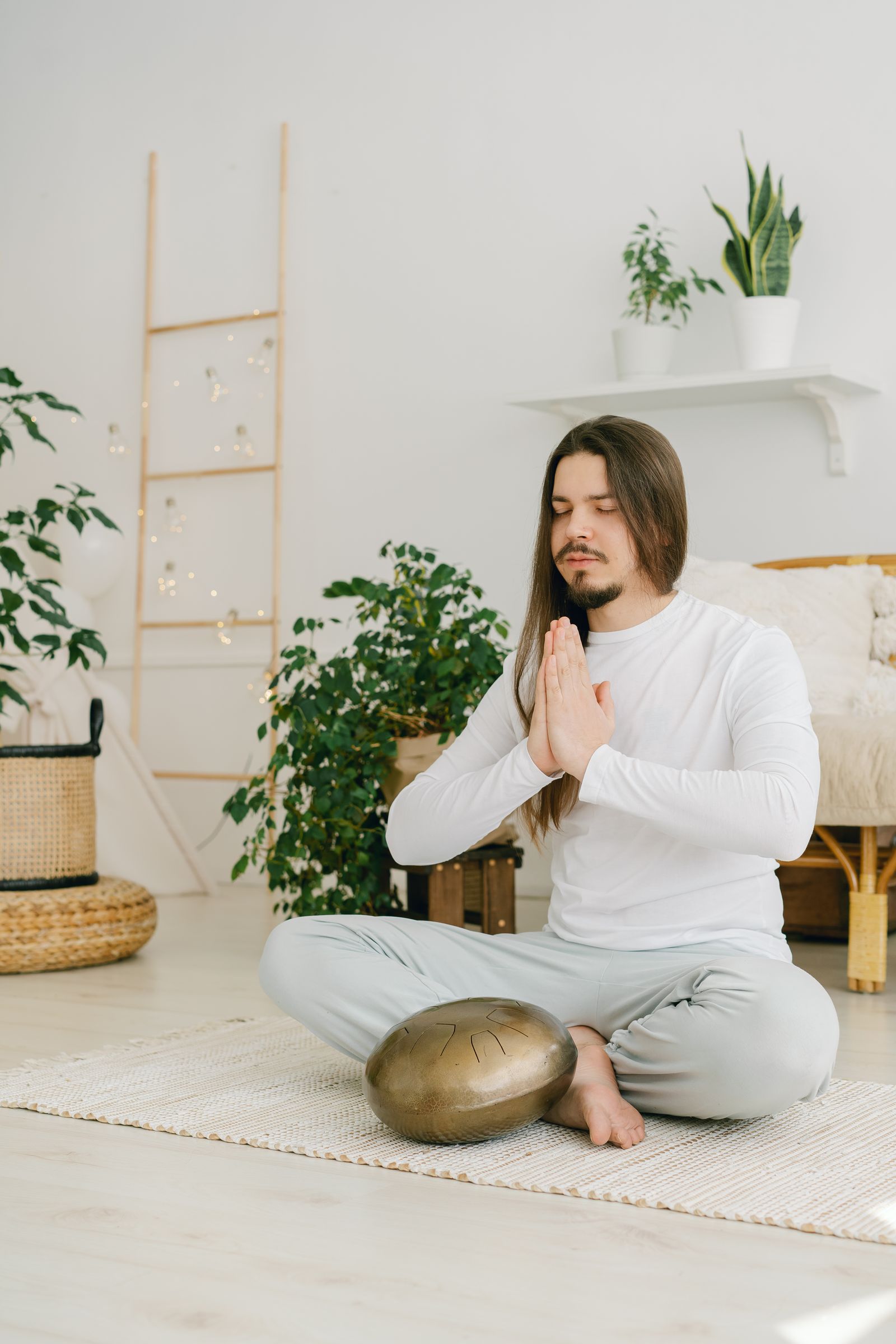
In the yogic tradition, Kundalini is described as a dormant energy resting at the base of the spine, activated through breath-led movement, sustained postures, and chanting. Practically: it's a style of practice combining vigorous breathwork, repetitive movement, and sound, held long enough that most people experience a noticeable physical and emotional release by the end.
What a session actually involves
A typical session moves through breath-led movement, sustained postures held longer than usual, and chanting or vocal toning. Sessions are guided progressively — intensity builds gradually. Practitioners commonly describe a rising warmth or a strong sense of release as the practice moves through the body. It's intense by design — meaning sustained effort and emotional release, not physical difficulty.
Is it safe? Do I need experience?
No prior experience is needed, and sessions are always optional. Because the breathwork is more vigorous than a typical yoga class, mention any relevant health conditions (cardiovascular, respiratory, pregnancy-related) to the facilitator beforehand.
What people commonly experience
Descriptions vary — strong emotional release (unexpected tears are common and normal), physical warmth or tingling, or simply calm and grounded. There's no "correct" response.
How it fits into a retreat day
One of several offered sessions each day — never the only thing happening, and never mandatory.
A grounded way to approach your first session
- Arrive with an empty stomach or light meal
- Mention any health conditions to the facilitator beforehand
- Expect intensity, not difficulty
- Stepping back mid-session is completely normal
Ready When You Are
Curious how this fits alongside chakra work and sound healing? See the full pillars of the retreat or explore a retreat that includes it.