
The short answer: natural settings tend to hold attention gently, without demanding it, which many people find makes mindful attention easier. Water moving, leaves shifting and birdsong give the mind something soft to rest on, in contrast to the sharp pulls of screens and notifications.
Soft fascination, in plain language
Environmental psychologists describe a quality called soft fascination: the kind of effortless interest we feel watching waves or clouds. Unlike a notification, it does not demand a reaction. Some researchers suggest that this lets directed attention, the effortful kind we use at work, recover. The research is ongoing and results vary between studies and people, so it is best taken as a promising idea and not a guarantee. What many people notice for themselves is simple: it is easier to be present when the surroundings are quiet and alive.
Why it works for meditation
Sitting to meditate in a city flat can feel like a battle against noise and distraction. Outdoors, the senses have something to do. You can anchor attention in the sound of water, the feel of air on your skin, or the smell of earth after rain. For restless people, this makes meditation more approachable than staring at the inside of their own thoughts. Our post on meditation for people who cannot sit still builds on this.
Practices you can try anywhere
- Five senses scan. Name five things you see, four you feel, three you hear, two you smell, one you taste.
- Sit spot. Choose one place outdoors and sit there for ten minutes, ideally at the same time each day.
- Slow walking. Walk at half your normal pace, noticing the ground.
- Sky gazing. Look at the sky for a few minutes without trying to label what you see.
- Listening to distance. Pick out the farthest sound you can hear, then the nearest.
What this looks like on the island
Inward Action is set in nature on a private island near Siolim, with water, trees and open sky around the practice spaces. Sunrise yoga, time by the water, kayaking and the fire ceremony under the Full Moon all take place outdoors. Nature is not a backdrop but part of the programme. See our guide on nature retreats versus resort retreats for more.
A sit-spot routine in detail
Choose a place you can return to: a bench, a rock, the edge of a lake or even a balcony with a view of a tree. Sit for ten minutes at roughly the same time each day. For the first three minutes, simply arrive: feel the seat, feel the air. For the next four, let attention move gently between sounds, sights and smells. For the last three, ask: what has changed since I sat down? Many people notice birds, light or weather they had never registered before. Over weeks, the same place becomes a kind of mirror, because you see how your own state varies while the setting stays familiar.
Water, trees and sky
Different elements invite different qualities of attention. Water moves, so it invites flowing attention and often helps restless minds settle. Trees are steady and vertical, which suits grounding practices. Sky is wide and suits open, spacious awareness. At Inward Action, the island offers all three, with kayaking for water, forest and river on longer retreats, and sunrise and Full Moon skies for the open view.
Limits to keep in mind
Nature is not a cure for stress or any condition, and not everyone feels calm outdoors. Some people find wild spaces unsettling, and that is fine. If heat, insects or uneven ground make you uncomfortable, start with short outings and take care of the basics: water, shade and appropriate footwear.
Frequently asked questions
Does nature improve concentration?
Some studies suggest it can, though findings vary. Many people simply find it easier to settle outdoors.
What if I don't live near nature?
A park, a tree or even a view of the sky can work. Short and regular matters more than wild and rare.
Do I need to meditate formally outdoors?
No. Simply paying attention counts.
Is it enough to take a phone-free walk?
Often, yes. Leaving the phone behind removes the biggest competitor for your attention.
Next step
Want your practice set among water, trees and sky?
Practice With Us
Take the practice to the island
Short guided days on our private island near Siolim, Goa. Pick your preferred dates, or book a private session for your group.
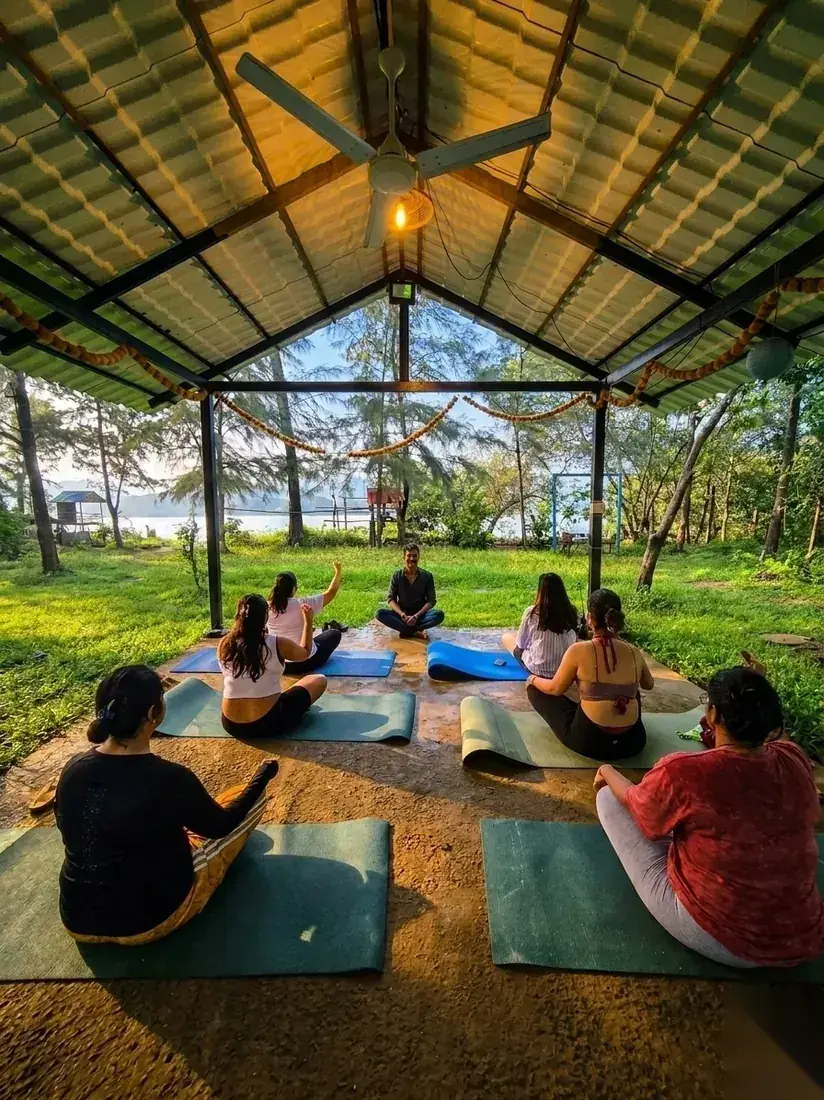
Morning Yoga and Island Breakfast
7:30 am to 10 am · ₹2,222 per person
Begin the day with breath, movement, and a nourishing island breakfast.
See details & book →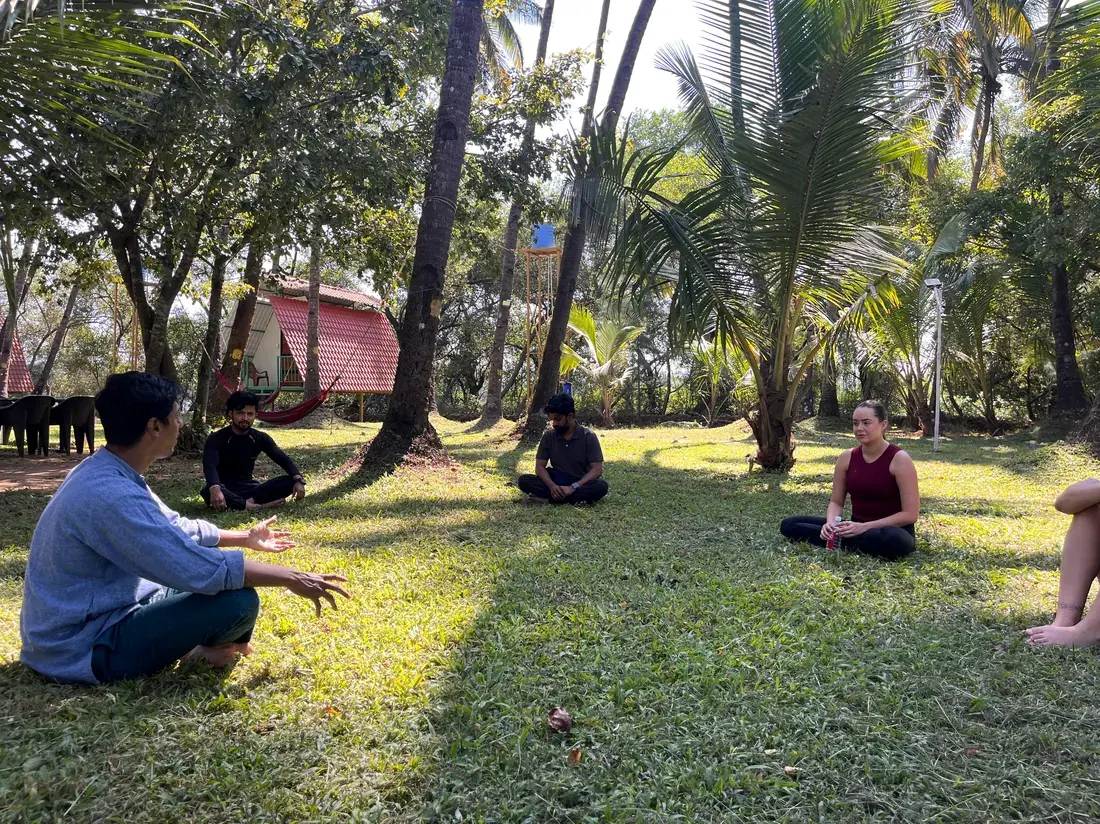
Full-Day Chakra Reset
10 am to 6 pm · Price on request
A full day to move energy, soften the mind, and celebrate being alive.
See details & book →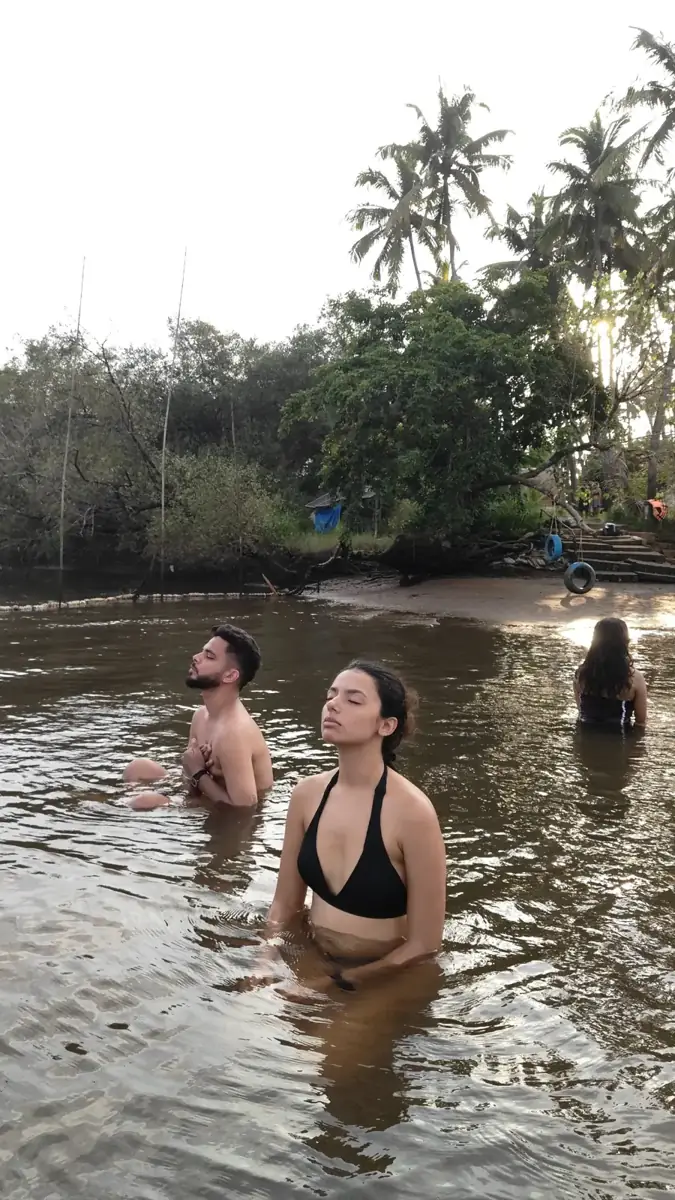
Island Breathwork Reset
4 pm to 7 pm · Price on request
Breathe deeper. Slow down. Come back to yourself.
See details & book →