
The short answer: yoga and meditation cannot set your boundaries for you, but they can make it easier to notice when you are crossing them, and to act on it. The most useful tools are small and repeatable: a transition ritual at the end of the workday, a few slow breaths before reacting, and clear limits on when your phone is allowed to reach you.
Why boundaries blur
When work lives on the same device as everything else, the day has no natural edges. Messages arrive at dinner, and ideas follow you into bed. Most people do not lack discipline. They lack a clear signal that work has ended. Contemplative practices are a way of creating that signal for yourself.
Five habits that help
1. A closing ritual. At the end of work, write down tomorrow's top three tasks, close the laptop and do a short stretch or three slow breaths. The ritual tells your mind the loop is closed.
2. A commute replacement. If you work from home, walk around the block or sit for five minutes before switching to home mode.
3. A pause before replying. When a late message arrives, take three slow breaths before deciding whether it needs action tonight.
4. Phone boundaries. Choose a time after which notifications are off, and charge your phone outside the bedroom.
5. A short evening practice. Ten minutes of gentle yoga or a seated body scan can mark the shift to rest. See our guide on how to start a daily yoga practice.
What meditation actually does here
Meditation trains the noticing skill. Over time you may catch the urge to check email earlier, and have a moment of choice before acting. That is a modest and useful change, not a transformation. Results vary, and it works best alongside practical boundaries, not instead of them.
When the problem is structural
Practices help individuals, but some boundary problems are about workload, culture or expectations. If your job genuinely requires you to be available around the clock, a breathing exercise will not fix that. It may help you decide what to ask for, but the conversation with your employer matters too. If work stress is affecting your health, please speak to your doctor or a qualified professional.
Taking it further on a retreat
A few days with a voluntary phone-off culture lets you experience what undivided evenings feel like, which can clarify what boundaries you want when you return. Our guide on how to prepare for a digital detox is a useful start, and how to return home after a retreat covers keeping the habits.
A starter plan for this week
- Choose a finishing time and tell one person
- Create a three-step closing ritual
- Turn off non-essential notifications after that time
- Practise three slow breaths before replying to late messages
- Review on Sunday: what worked?
Scripts that help you hold a boundary
Practices help you notice, but you may also need words. Some neutral phrases that many people find useful: "I will pick this up first thing tomorrow." "I am offline after six, and I will reply in the morning." "Can we agree on a time to review this together?" Rehearse them quietly after a breathing practice so they come easily when the moment arrives. Clear and kind is usually better than apologetic.
A ten-minute evening sequence
Try this on days when work has run late. Stand and shake out your hands and shoulders for a minute. Do a slow forward fold with bent knees for five breaths, then roll up one vertebra at a time. Sit on the floor or a chair and take ten slow breaths, lengthening the exhale. Finish by writing one line: "What I finished today, and what can wait." Then switch your phone to silent. Nothing about this is dramatic, but done regularly it works as a daily full stop.
What to do when you slip
You will cross your own boundaries sometimes, because of deadlines, emergencies or habit. Treat it as information. Ask what pulled you across and whether a different arrangement would help. Boundaries are adjusted over time, not set once and defended forever.
Frequently asked questions
Can yoga really help with work stress?
Many people find gentle movement and breathing helpful for feeling steadier. It is a supportive habit, not a treatment.
What if my job requires me to be reachable?
Define narrow windows for availability and communicate them. Small changes still help.
How long should a closing ritual take?
Two to ten minutes is enough.
Will a retreat fix my boundaries?
It can give you space and perspective, but keeping boundaries is an ongoing practice.
Next step
Want a few phone-free days to reset your rhythm?
Practice With Us
Take the practice to the island
Short guided days on our private island near Siolim, Goa. Pick your preferred dates, or book a private session for your group.
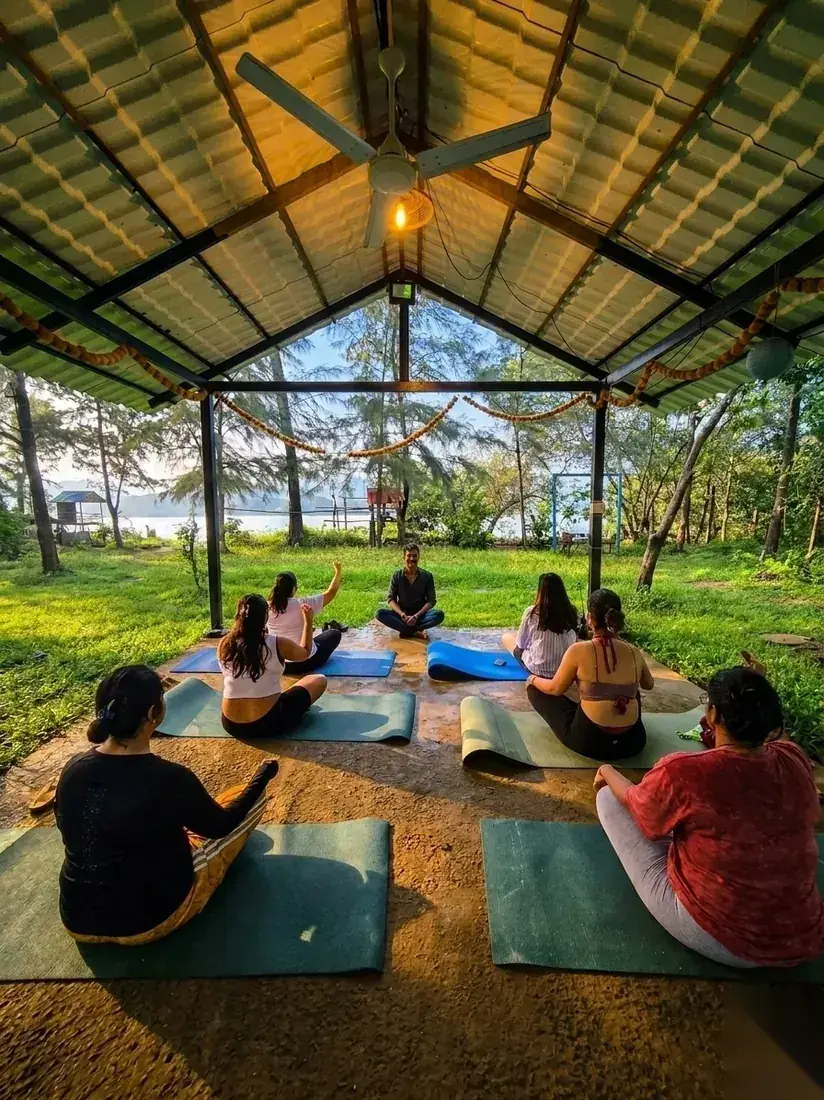
Morning Yoga and Island Breakfast
7:30 am to 10 am · ₹2,222 per person
Begin the day with breath, movement, and a nourishing island breakfast.
See details & book →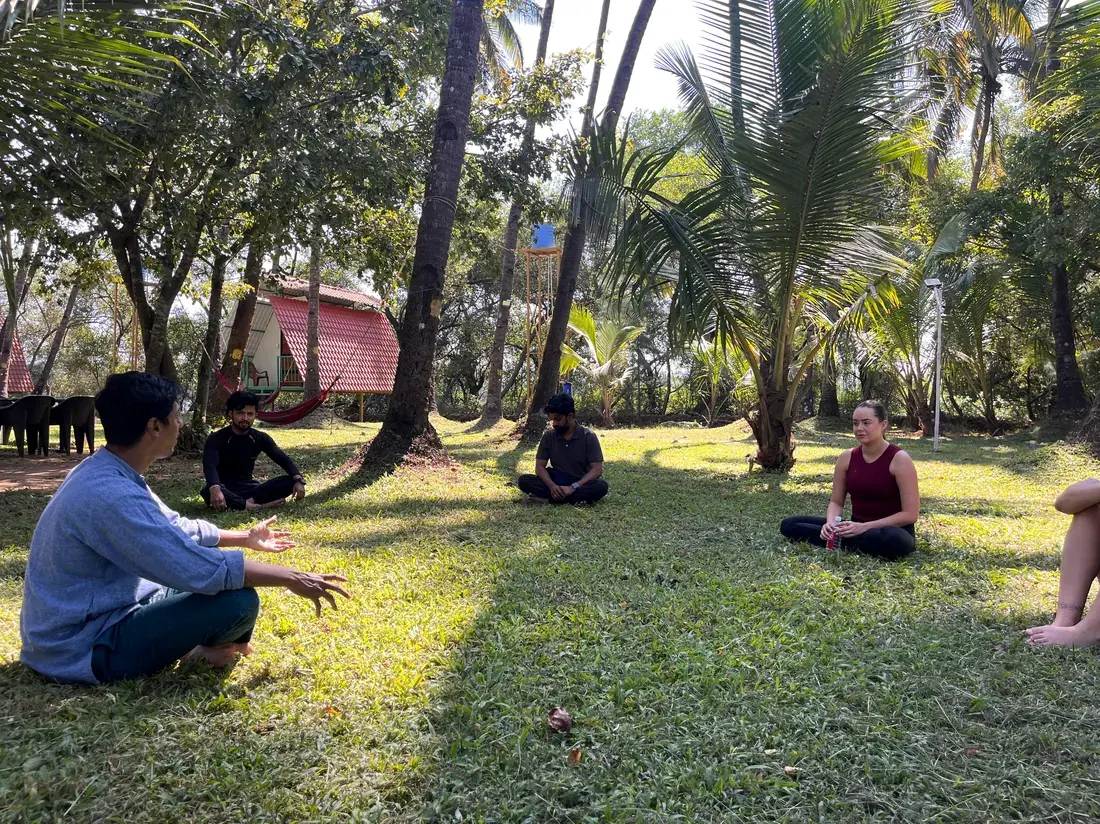
Full-Day Chakra Reset
10 am to 6 pm · Price on request
A full day to move energy, soften the mind, and celebrate being alive.
See details & book →
Island Breathwork Reset
4 pm to 7 pm · Price on request
Breathe deeper. Slow down. Come back to yourself.
See details & book →