A fire ceremony is simpler in practice than it sounds in description — a structured gathering around fire, built around the idea that what burns is released and what remains is yours to carry forward. Here's what actually happens, step by step.
Before the fire is lit
The group typically gathers as dusk settles, often after a day of practice — breathwork, movement, sound healing — that's already brought people into a more settled, reflective state. There's usually a brief framing from the facilitator: what the ceremony is for, what's expected (very little, beyond presence), and an invitation to think about what you're there to release.
Lighting the fire
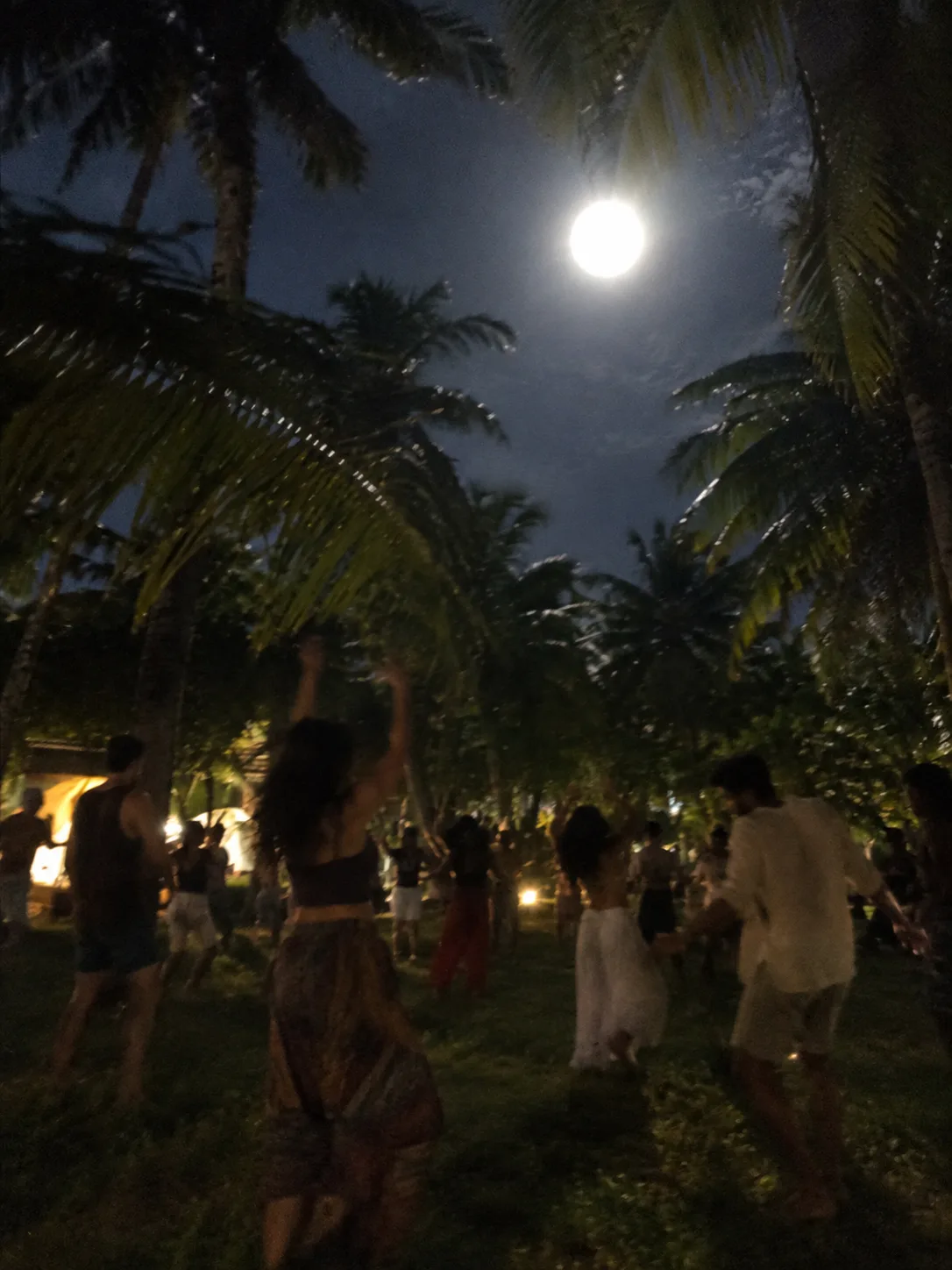
The fire is lit as the moon rises, timed deliberately rather than incidentally. This isn't a bonfire for warmth or ambiance — it's the visual and physical center of the ceremony, and the moment it catches tends to shift the energy of the group noticeably.
The ritual itself
What follows usually includes: - A period of guided reflection or meditation, often with the invitation to silently name what you're releasing - Movement — ecstatic dance is common, unstructured and personal rather than choreographed, allowing people to physically express whatever's surfacing - Sound — chanting, drumming, or simply the crackle of the fire itself, used to hold the space rather than direct it - A closing circle, often where the group comes back together, sometimes sharing briefly, sometimes simply sitting in silence together before the ceremony winds down
Do you have to say or do anything?
No. Participation is entirely on your own terms — you can dance, sit quietly, journal instead, or simply watch the fire. Nobody is required to share anything aloud, and the ceremony is structured so that full engagement and quiet observation both feel like legitimate ways to take part.
What people commonly feel
Reactions vary widely. Some people feel a genuine emotional release — tears aren't unusual and are treated as completely normal. Others feel calm, or simply present, without anything dramatic happening. Both are considered a full experience of the ceremony; there's no "correct" reaction to have.
Is it safe?
Fire ceremonies are conducted with appropriate safety precautions — a controlled fire, adequate space, and facilitator oversight throughout. If you have any specific concerns (mobility, sensitivity to smoke, etc.), mentioning them to the facilitator beforehand means the ceremony can be adjusted so you can still participate comfortably.
Why it closes the retreat
The fire ceremony sits at the very end of every retreat cycle deliberately — it's not a mid-retreat activity but the culmination of everything leading up to it, timed to the Full Moon itself, so that the release it's built around lands after days of preparation rather than as a standalone event.
Next step
Want to experience the fire ceremony without a multi-day stay?
Practice With Us
Take the practice to the island
Short guided days on our private island near Siolim, Goa. Pick your preferred dates, or book a private session for your group.
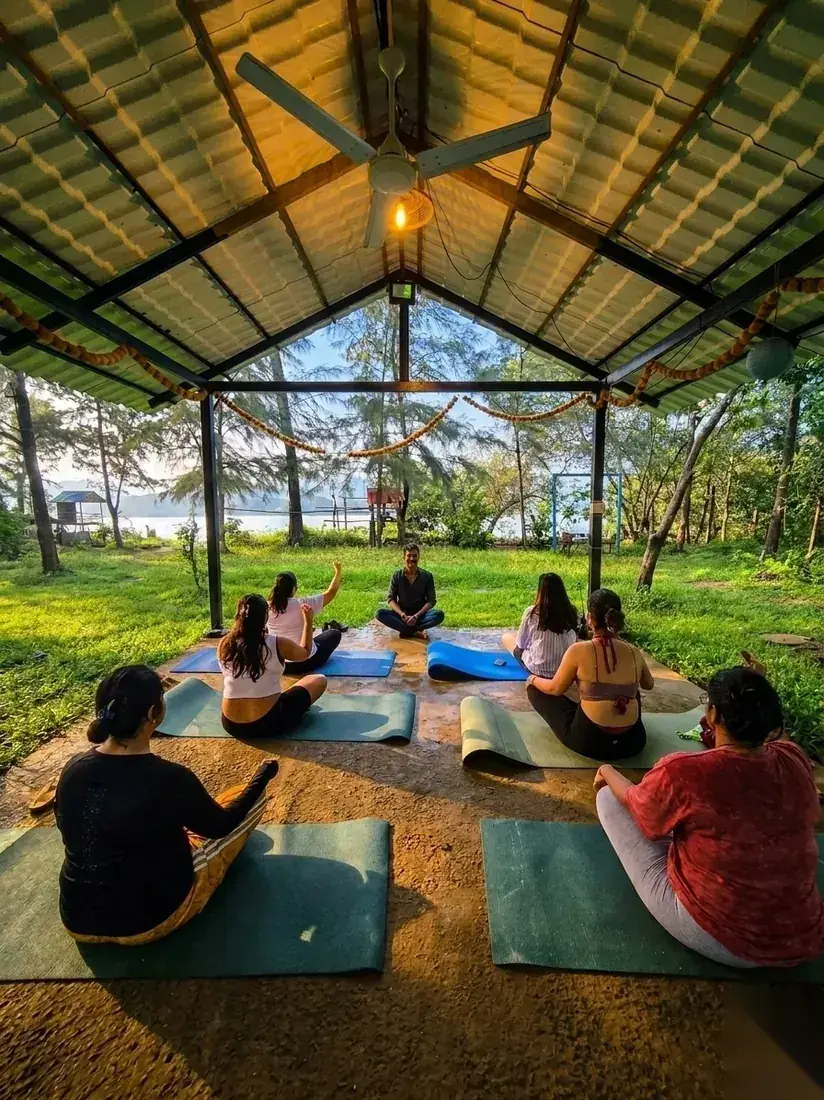
Morning Yoga and Island Breakfast
7:30 am to 10 am · ₹2,222 per person
Begin the day with breath, movement, and a nourishing island breakfast.
See details & book →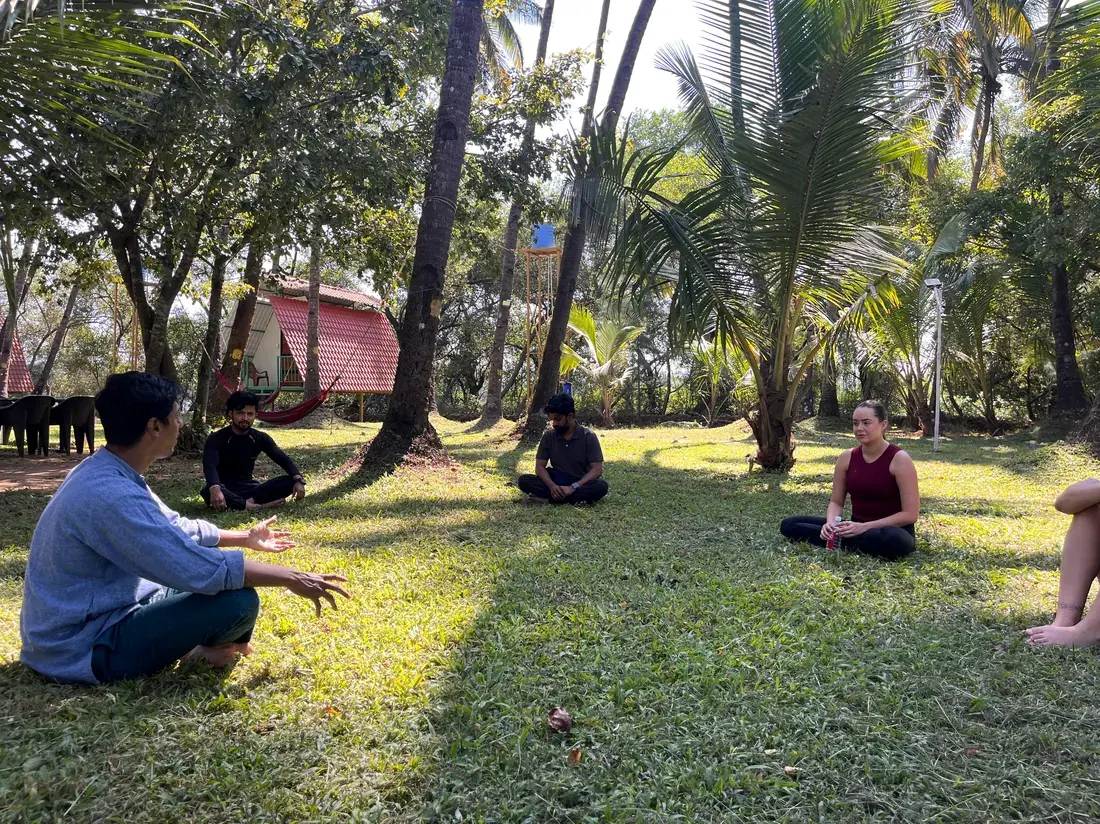
Full-Day Chakra Reset
10 am to 6 pm · Price on request
A full day to move energy, soften the mind, and celebrate being alive.
See details & book →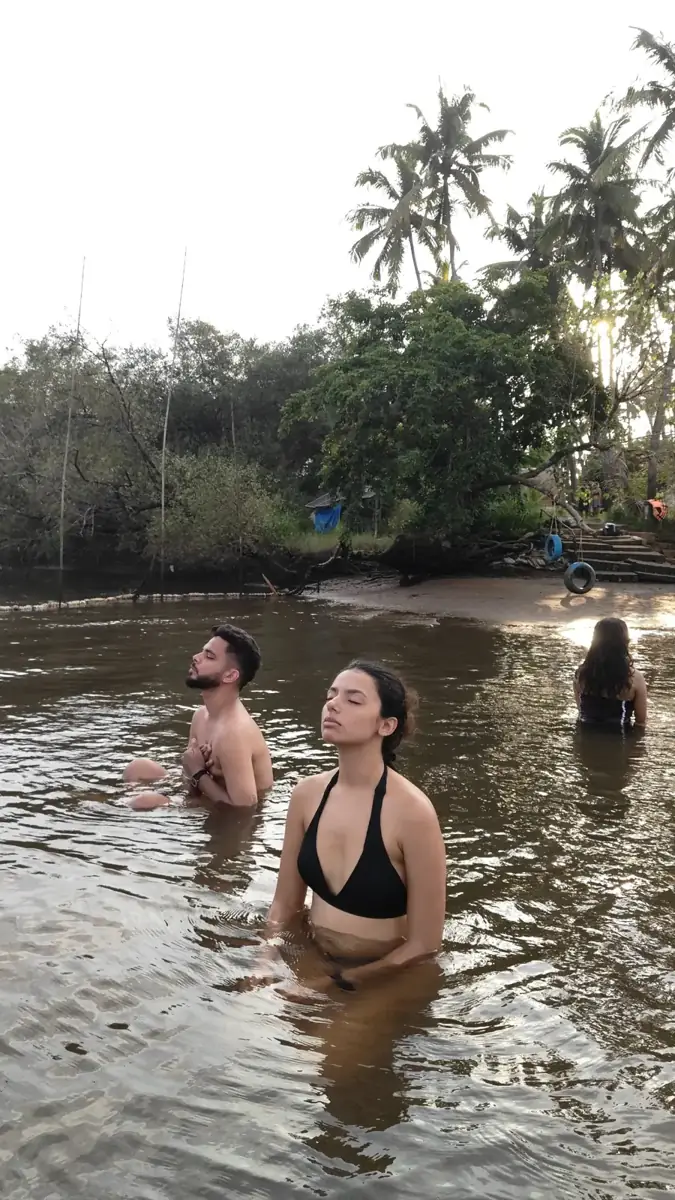
Island Breathwork Reset
4 pm to 7 pm · Price on request
Breathe deeper. Slow down. Come back to yourself.
See details & book →