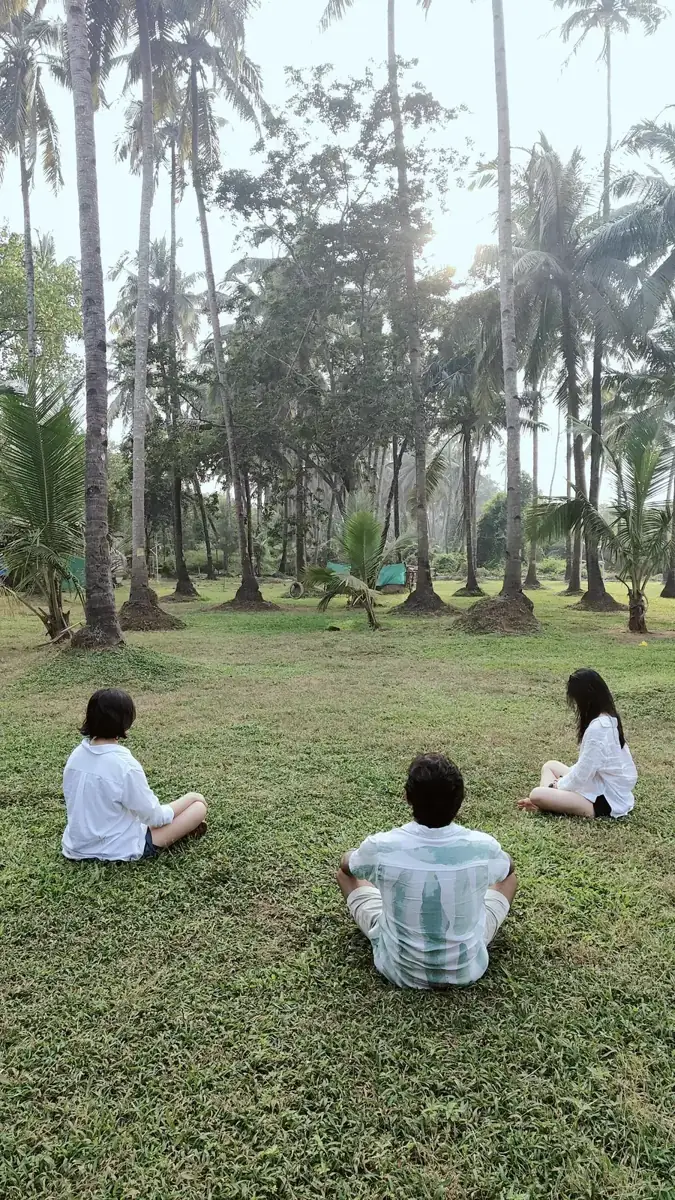
You don't need a facilitator, a fire, or a specific tradition to build a release ritual that actually works for you. What makes a ritual effective isn't its ceremony — it's the structure: a clear beginning, a physical or symbolic act, and a defined end. Here's a simple framework.
Why structure matters more than symbolism
Most people who try to "just think about letting go" find it doesn't stick — the reflection is too vague, with no clear edges. A ritual works because it gives the process a shape: a specific moment when you begin, something concrete you do, and a specific moment when it's over. That structure is what makes release feel real rather than aspirational.
A simple framework you can build yourself
1. Choose a trigger. This can be a moon phase, a birthday, the end of a difficult period, or simply a Sunday evening you've set aside. The Full Moon works well because it's recurring and visible — you don't need to remember to do this, the moon reminds you.
2. Get specific about what you're releasing. Vague intentions ("I want to let go of stress") are harder to complete than specific ones ("I'm releasing the guilt I've been carrying about [specific situation]"). Write it down if that helps make it concrete.
3. Choose a physical act. This is the part that makes it a ritual rather than just a thought. Common options: writing it on paper and burning it safely, writing it and then closing the journal deliberately, lighting a candle and sitting with it until it burns down, or simply speaking it aloud once, clearly.
4. Mark the close. Rituals need an ending, not just a fade-out. This could be as simple as closing your eyes for one breath and saying (aloud or silently) "this is released" — something that tells your mind the process is complete.
5. Note what you're carrying forward. Release rituals work best paired with an intention for what comes next, even a small one. This turns the ritual from just an ending into a genuine transition.
Doing this safely
If your ritual involves fire — burning paper, a candle — do it somewhere safe, away from anything flammable, with water or a way to extinguish it nearby. This isn't a dampener on the practice; it just means the ritual is something you can actually repeat without incident.
Why a guided version can go deeper
A self-directed version of this is genuinely valuable and something you can return to anytime. But a guided ritual — done as part of a retreat, with a facilitator holding the space and a group moving through it together — tends to access a different depth, partly because you're not managing the structure yourself, and partly because doing it in community changes the experience in ways that are hard to replicate solo.
Next step
Want to experience a guided version of this, built around an actual Full Moon?
Practice With Us
Take the practice to the island
Short guided days on our private island near Siolim, Goa. Pick your preferred dates, or book a private session for your group.
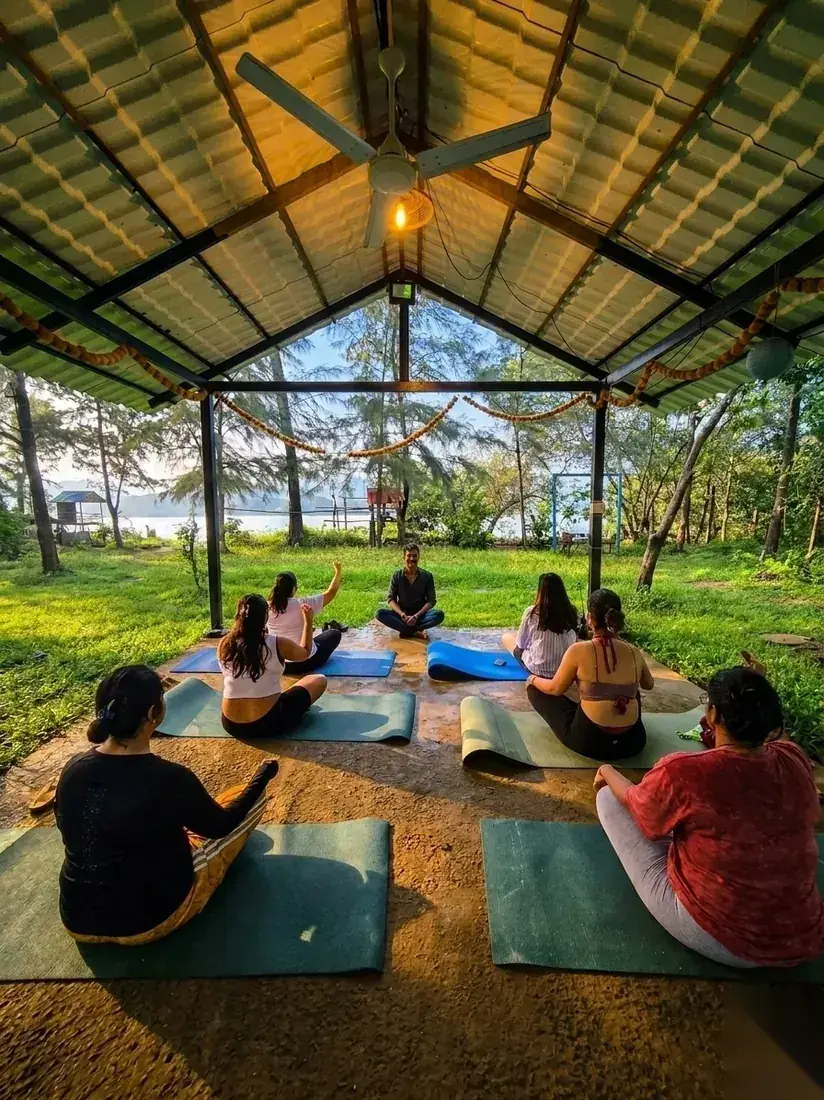
Morning Yoga and Island Breakfast
7:30 am to 10 am · ₹2,222 per person
Begin the day with breath, movement, and a nourishing island breakfast.
See details & book →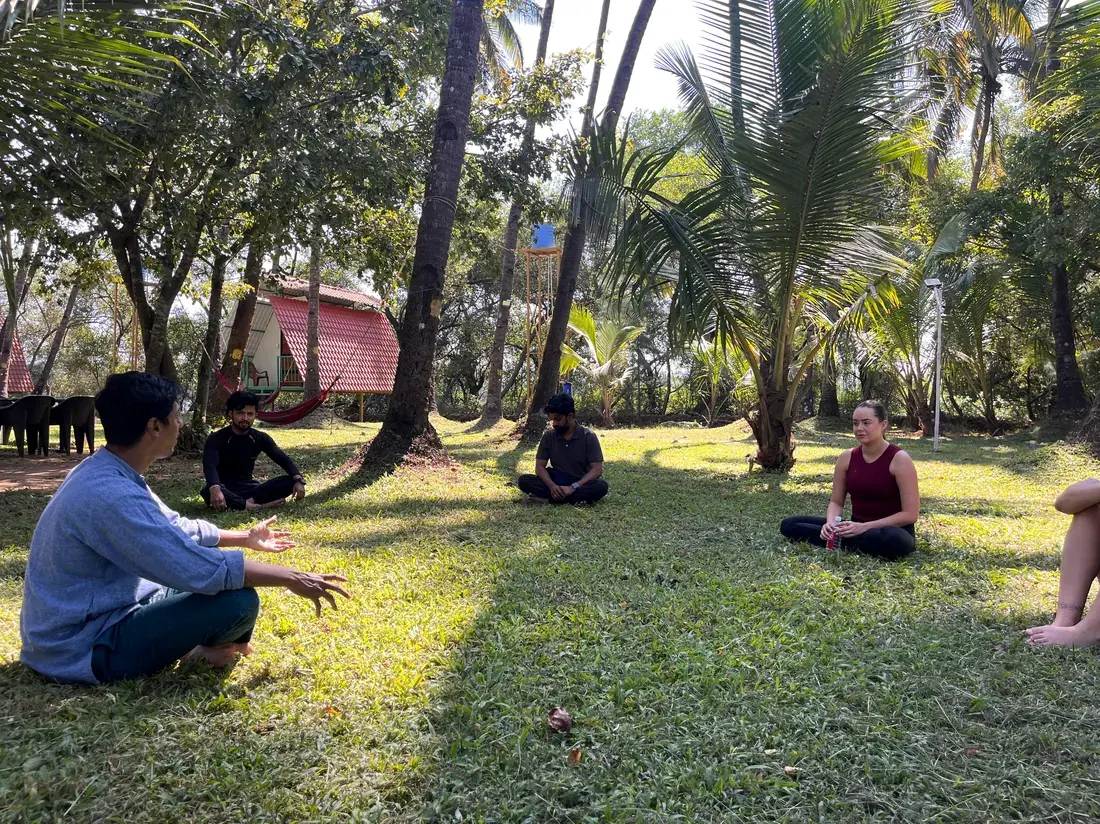
Full-Day Chakra Reset
10 am to 6 pm · Price on request
A full day to move energy, soften the mind, and celebrate being alive.
See details & book →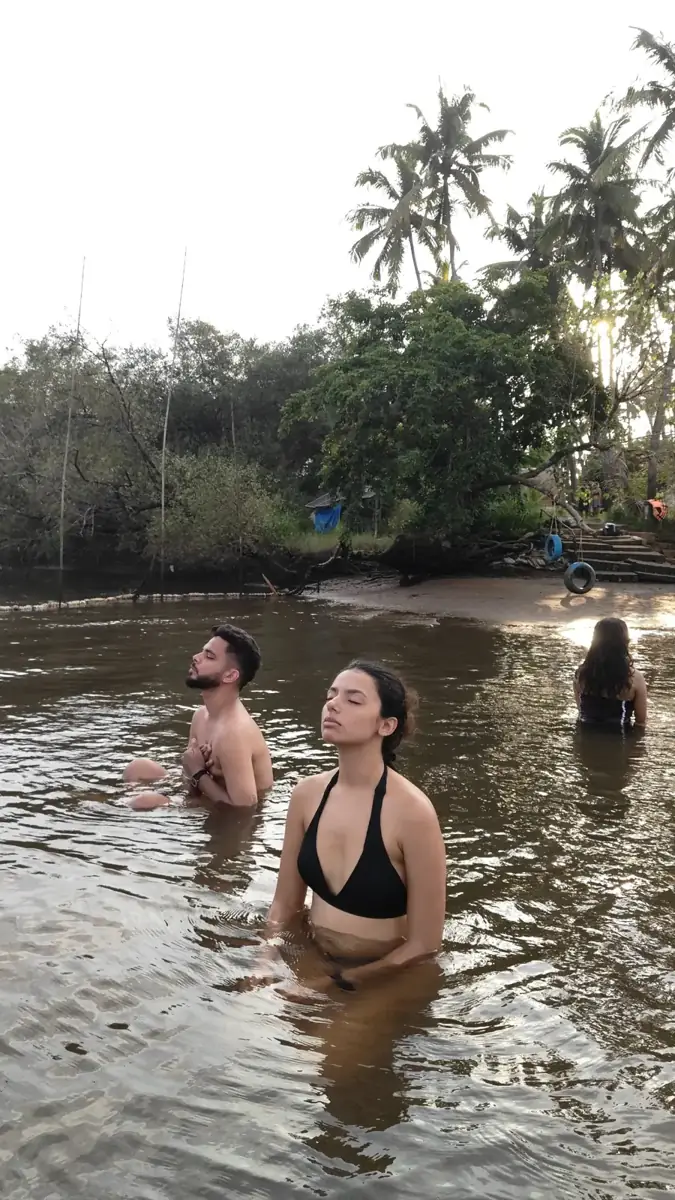
Island Breathwork Reset
4 pm to 7 pm · Price on request
Breathe deeper. Slow down. Come back to yourself.
See details & book →