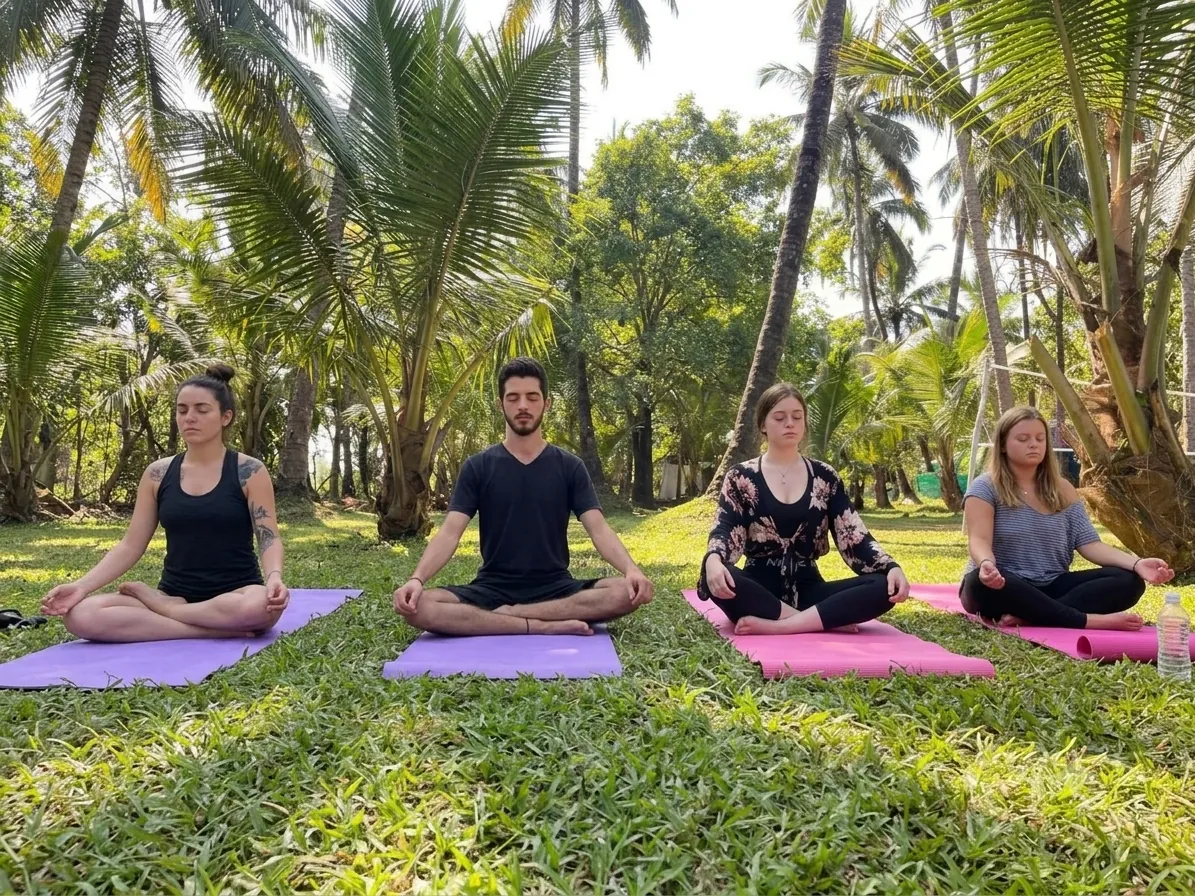
The short answer: bring a notebook and a pen, write a little each day without worrying about quality, and keep a few simple prompts to hand. A retreat gives you unusual quiet, and a journal helps you notice what is happening in it. Many guests find they use their journal far more than they planned.
Why journaling suits a retreat
With your phone put away and the pace slowed, thoughts that are usually crowded out start to surface. Writing gives them somewhere to go. It also creates a record, so that after you return home you have more than a vague memory of how you felt. Journaling is a reflective habit, not a treatment, and it works best when it feels easy.
What to bring
- A small notebook that you do not mind getting slightly damp or dusty
- Two pens, in case one runs out
- A sealable pouch or dry bag, since the island is humid and near water
- A headlamp if you write after dark
Our packing list covers the rest.
When to write
- Morning: before or after sunrise practice, write whatever is on your mind for five minutes
- Afternoon: a few lines about what you noticed in the day's sessions
- Evening: a short reflection before sleep
- After the fire ceremony: if you wish, note what you released and what you are carrying forward
Prompts to try
- What am I noticing in my body right now?
- What am I carrying that I did not choose?
- What felt easy today, and what felt hard?
- What would I like less of, and more of, in my life?
- What do I want to remember about this place?
- What is one small thing I can do differently when I get home?
More ideas are in our post on Full Moon journaling prompts.
Keeping it private and kind
Your journal is yours. You do not have to share it, and you do not have to write well. Avoid judging what you write. If a prompt brings up something painful, you can stop, close the book and take a walk. Journaling is not a replacement for professional support, so if difficult feelings persist, speak to a doctor or qualified professional.
Revisiting your entries
Wait a few weeks after returning, then read through your notes. Highlight anything that still feels true and choose one small action. This is the bridge between retreat insight and everyday life. See also how to return home after a retreat.
Three simple journaling formats
The brain dump. Set a timer for five minutes and write without stopping or editing. Whatever comes, comes. This is ideal for the morning.
The three lines. Each evening, write one line about your body, one about your mind and one about something you appreciated. It takes two minutes and builds a useful record.
The letter. Write a letter to yourself to be opened in a month. Include what you hope to remember, and one thing you would like to try. Many guests find this the most valuable page when they read it later.
What if nothing comes?
Some days you will stare at a blank page. That is fine. Draw, list five things you can see, or write "nothing to say today" and stop. The habit matters more than the content. Often the quiet day is followed by a day when the writing flows.
Using your journal in the Full Moon ritual
If you wish, you can bring a few lines from your journal to the fire ceremony. Some guests write what they want to release on a small piece of paper and place it in the fire, as part of the ritual. This is entirely optional. If you do take part, follow the facilitators' safety instructions around the fire, keep a sensible distance, and leave any pages you want to keep in your tent.
Frequently asked questions
Do I have to journal at a retreat?
No. Like every session, it is optional.
What if I do not like writing?
Try lists, single words or drawings instead.
Will I be asked to share?
No. Your journal stays with you unless you choose otherwise.
Is it okay to write digitally?
Paper tends to suit the phone-off culture better, but choose what works for you.
Next step
Want unhurried time to write and reflect?
Practice With Us
Take the practice to the island
Short guided days on our private island near Siolim, Goa. Pick your preferred dates, or book a private session for your group.
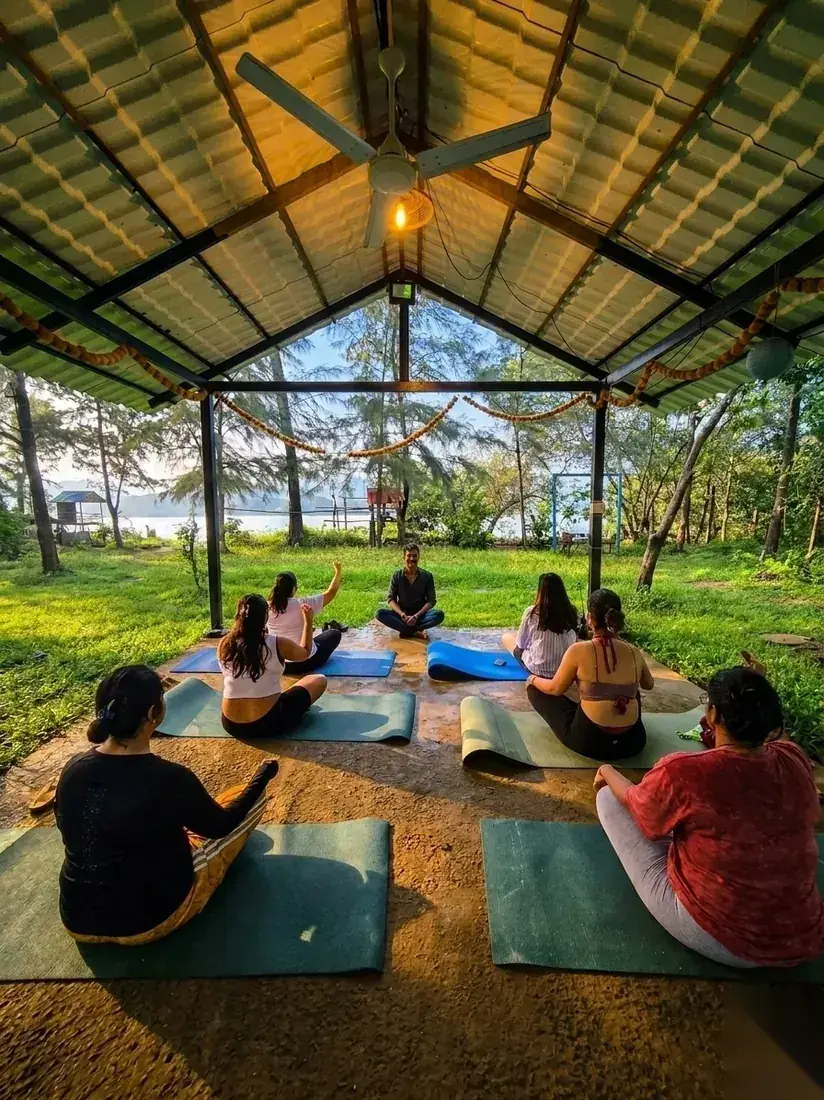
Morning Yoga and Island Breakfast
7:30 am to 10 am · ₹2,222 per person
Begin the day with breath, movement, and a nourishing island breakfast.
See details & book →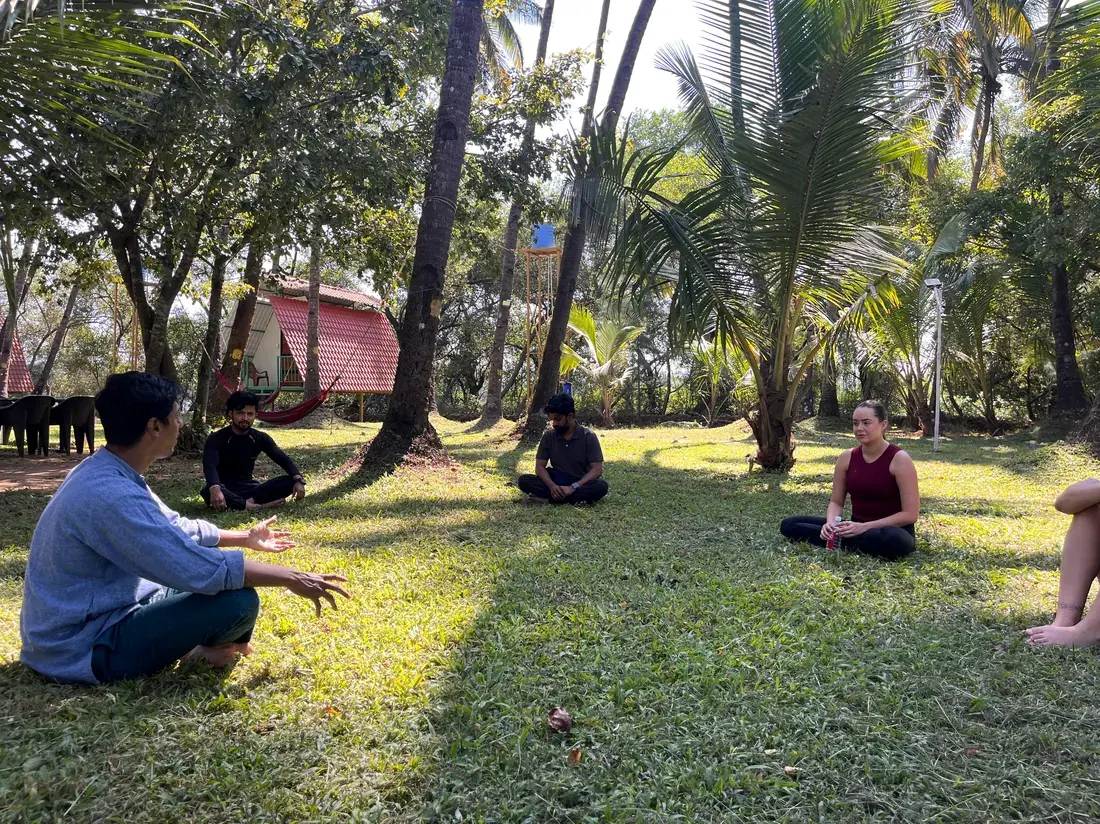
Full-Day Chakra Reset
10 am to 6 pm · Price on request
A full day to move energy, soften the mind, and celebrate being alive.
See details & book →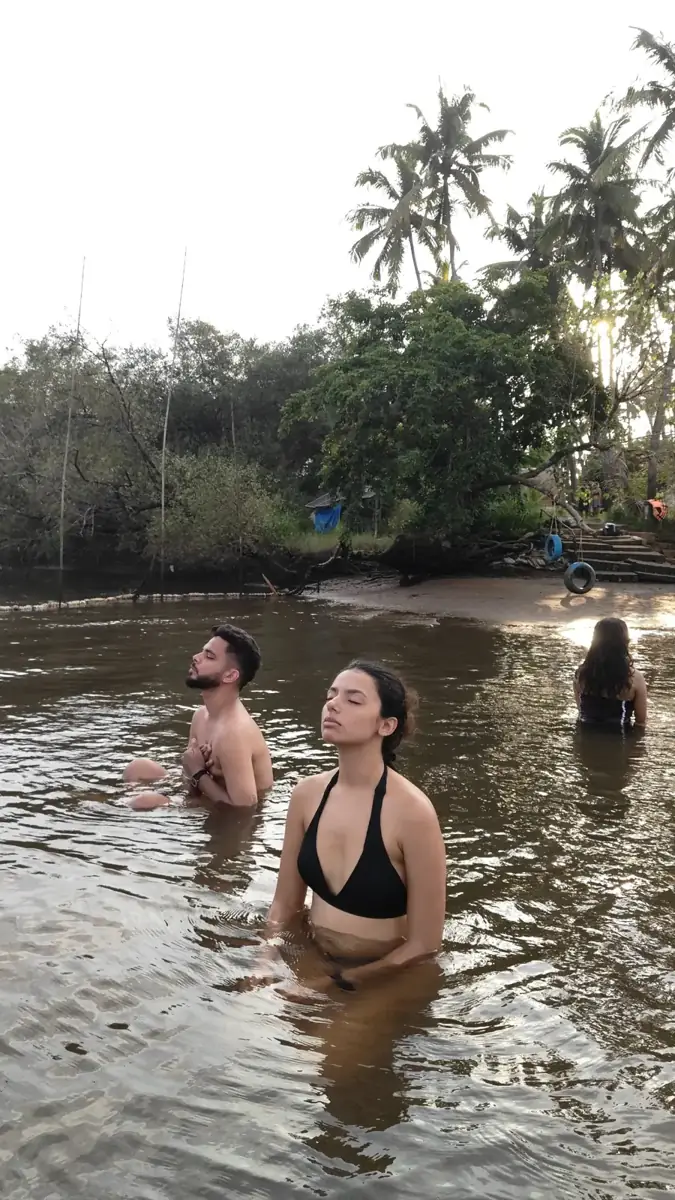
Island Breathwork Reset
4 pm to 7 pm · Price on request
Breathe deeper. Slow down. Come back to yourself.
See details & book →