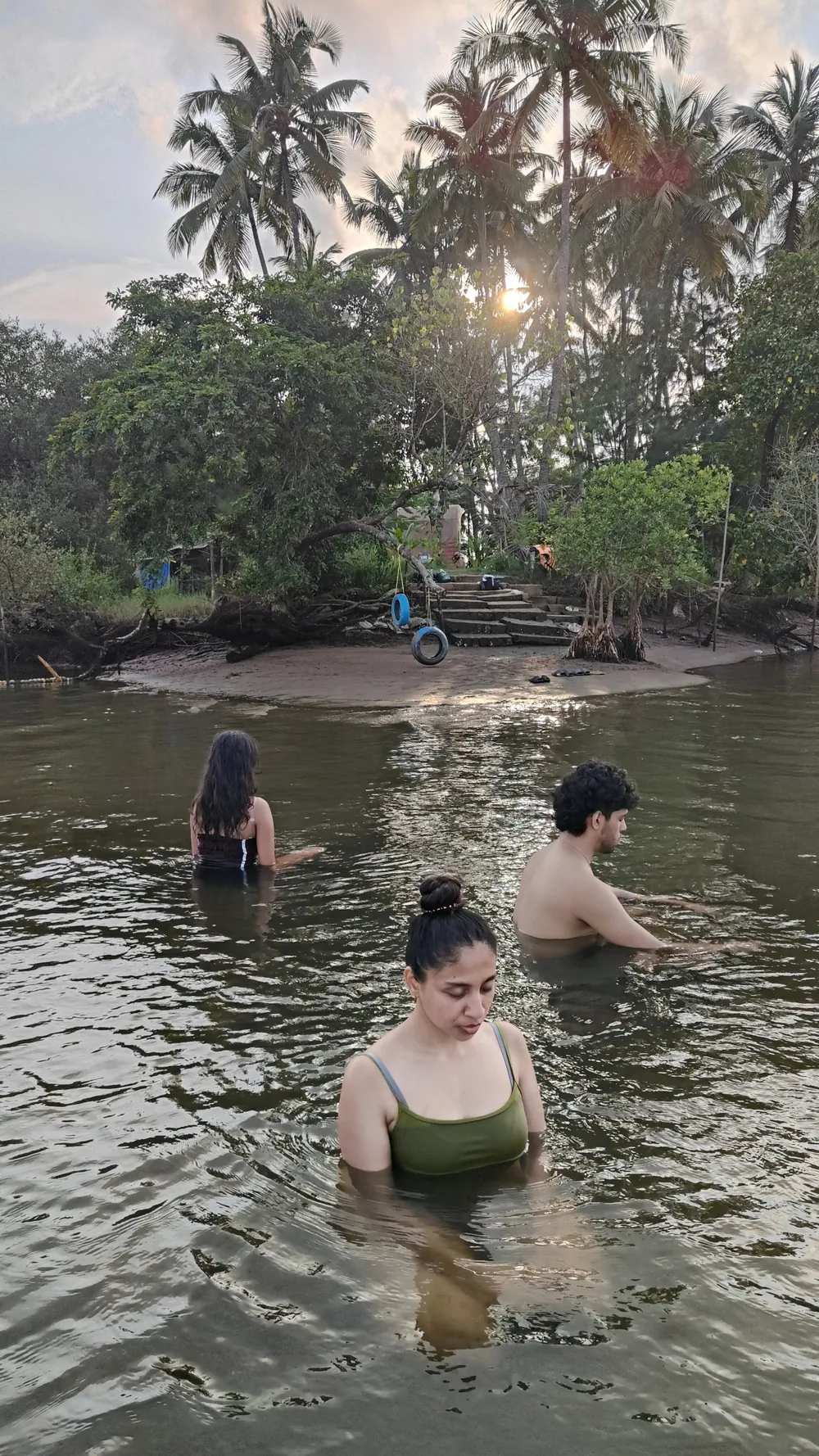
The short answer: it is worth it if you want structure, a small group and a real break from routine, and less so if what you want is total freedom. Whether a retreat is worth it depends on what you are comparing it to. Most people asking this question are quietly weighing it against two different things at once: an ordinary holiday, and doing nothing at all. The honest answer is different for each.
Compared with a regular holiday
A beach holiday gives you freedom. A retreat gives you a shape. You commit to a schedule, a small group and a structure, rather than deciding each morning what to do. In return you get things that are hard to organise alone: guided breathwork, a community moving through the same days, and a ritual close that gives the trip a clear ending rather than simply stopping when your flight leaves.
If you specifically want unstructured days, a retreat will feel like a worse holiday. If you want something with more intention, a pause that helps you step out of your usual patterns, it offers something a standard holiday does not. That said, a retreat is not a medical treatment and we make no claims that it will fix anything. Think of it as a well-designed, supportive space to rest and reflect.
Compared with staying home
Against taking the same time off at home, the advantage of a retreat is distance. Most people find it much easier to put the phone down and settle somewhere removed from their usual triggers than in the middle of normal life. A voluntary phone-off culture, shared meals and a setting on a private island make disconnecting a default rather than a daily act of willpower.
What determines whether it is worth it for you
- Group size. A capped group of roughly 15 to 25 gives far more individual attention than a large one. This affects value more than almost anything else.
- What is included. Accommodation, meals, sessions and activities bundled into one price are easier to evaluate than a low price with constant add-ons. Our guide to what drives retreat costs explains how to compare.
- How much you need a pause. If you have not taken a real break in a long time, the value tends to be more obvious. If you are already well rested, a retreat can still be enjoyable but less dramatic.
- Whether you like structure. Guests who enjoy a guided arc get more from it. Solo travellers often find the structure removes the burden of planning.
- Timing and length. A retreat that is too short can feel rushed, and one that is too long can feel like a stretch. Pick the format that matches your calendar.
Who is likely to find it worth it
- People coming off a demanding stretch of work who want a deliberate reset
- Solo travellers who want company without having to organise it
- Beginners curious about yoga, breathwork or meditation in a low-pressure setting
- Anyone marking a transition and wanting a ritual to close one chapter
Who may not
- People who want a hands-off, fully independent holiday
- Anyone hoping for a guaranteed outcome or a cure. No retreat can promise that, and you should be wary of any that does.
- Those unable to take the time off comfortably, since a rushed trip defeats the purpose
A fairer way to measure value
Price per night is a poor yardstick for a retreat. A more useful approach is to ask what you would otherwise spend to recreate it: guided sessions, meals, accommodation, a facilitator's attention, transport logistics and a ready-made community. Then ask what you would pay for a few days of genuine rest. Neither calculation will give a single right answer, but together they show whether the value lies in the programme or only in the setting.
It is also worth noting that the benefits of a retreat often arrive after you return, in small changes to how you use your evenings, your phone or your time. Whether you keep those changes is up to you, and a good retreat will say so honestly instead of promising a permanent transformation.
A checklist for deciding honestly
- What specifically do I hope feels different when I leave?
- Can I take the time without stress at either end?
- Do I enjoy group settings, or would I find them draining?
- Am I comfortable with optional but structured days?
- Have I read what is included, not just the price?
- Do I have any health considerations to discuss with my doctor first?
If you can answer the first question clearly, you are probably well placed to judge. If you cannot, spend a little time on it before booking anything.
How booking works
Booking is invitation-led. You request an invitation, a seat is held for 24 to 48 hours, you have a call where you can ask whatever you need, and a deposit then confirms your place. The call is a good opportunity to test whether the retreat feels right before you commit.
Frequently asked questions
Is a short retreat worth it?
Yes, for many people. The 3-Day Island Reset includes the core practices and the Full Moon ritual. Our guide to whether three days is enough goes into detail.
Will I feel different afterwards?
Experiences vary, and we cannot promise a particular outcome. Many guests describe feeling rested and clearer, but that is personal.
Is it worth going alone?
Yes. Solo guests are common, and the small group makes it easy to connect.
What if I don't enjoy it?
Every session is optional, so you can step back and rest. Ask about terms on your call.
Next step
If a clear reason for going is forming, look at what each format includes and request an invitation.
Practice With Us
Take the practice to the island
Short guided days on our private island near Siolim, Goa. Pick your preferred dates, or book a private session for your group.
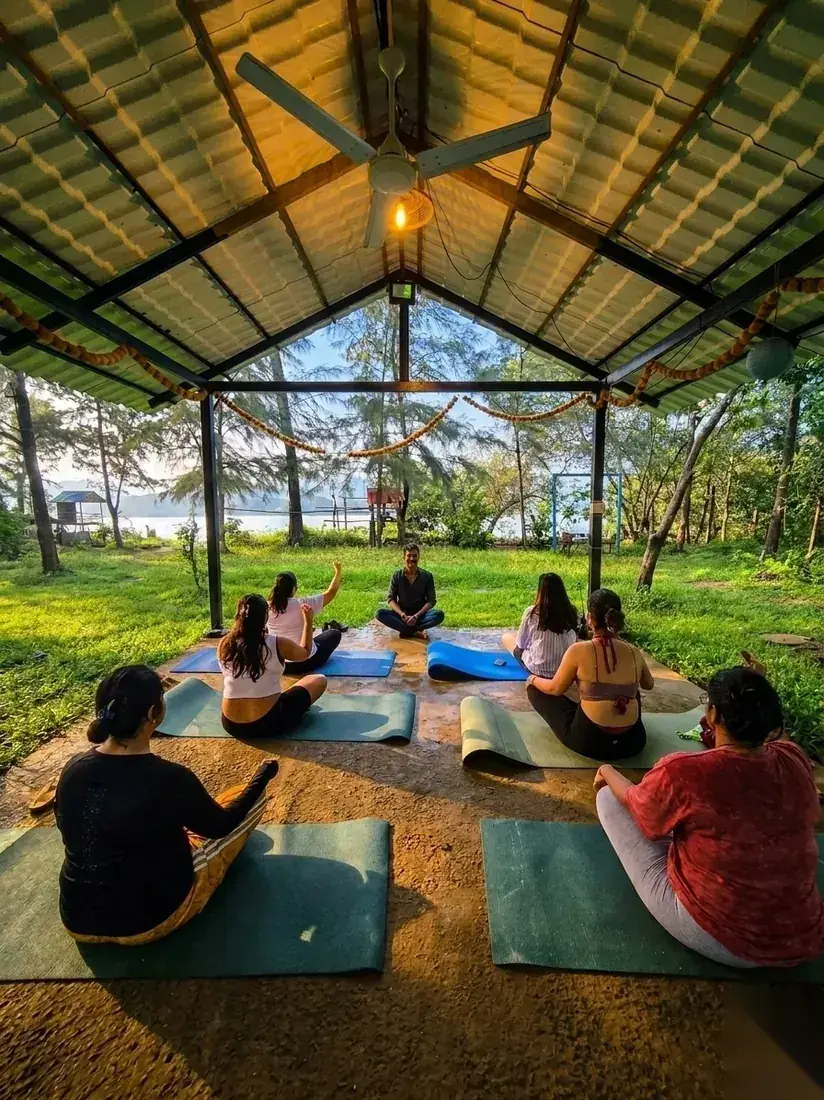
Morning Yoga and Island Breakfast
7:30 am to 10 am · ₹2,222 per person
Begin the day with breath, movement, and a nourishing island breakfast.
See details & book →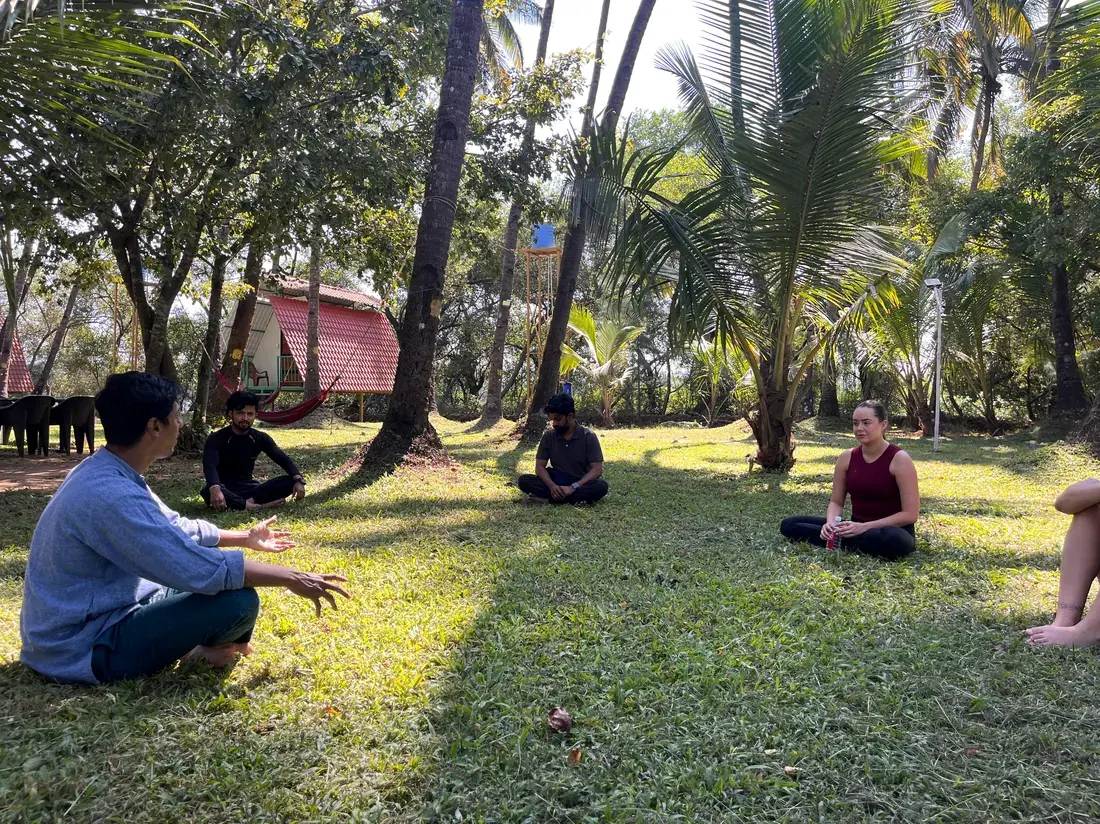
Full-Day Chakra Reset
10 am to 6 pm · ₹5,555 per person
A full day to move energy, soften the mind, and celebrate being alive.
See details & book →
Island Breathwork Reset
4 pm to 7 pm · ₹4,444 per person
Breathe deeper. Slow down. Come back to yourself.
See details & book →