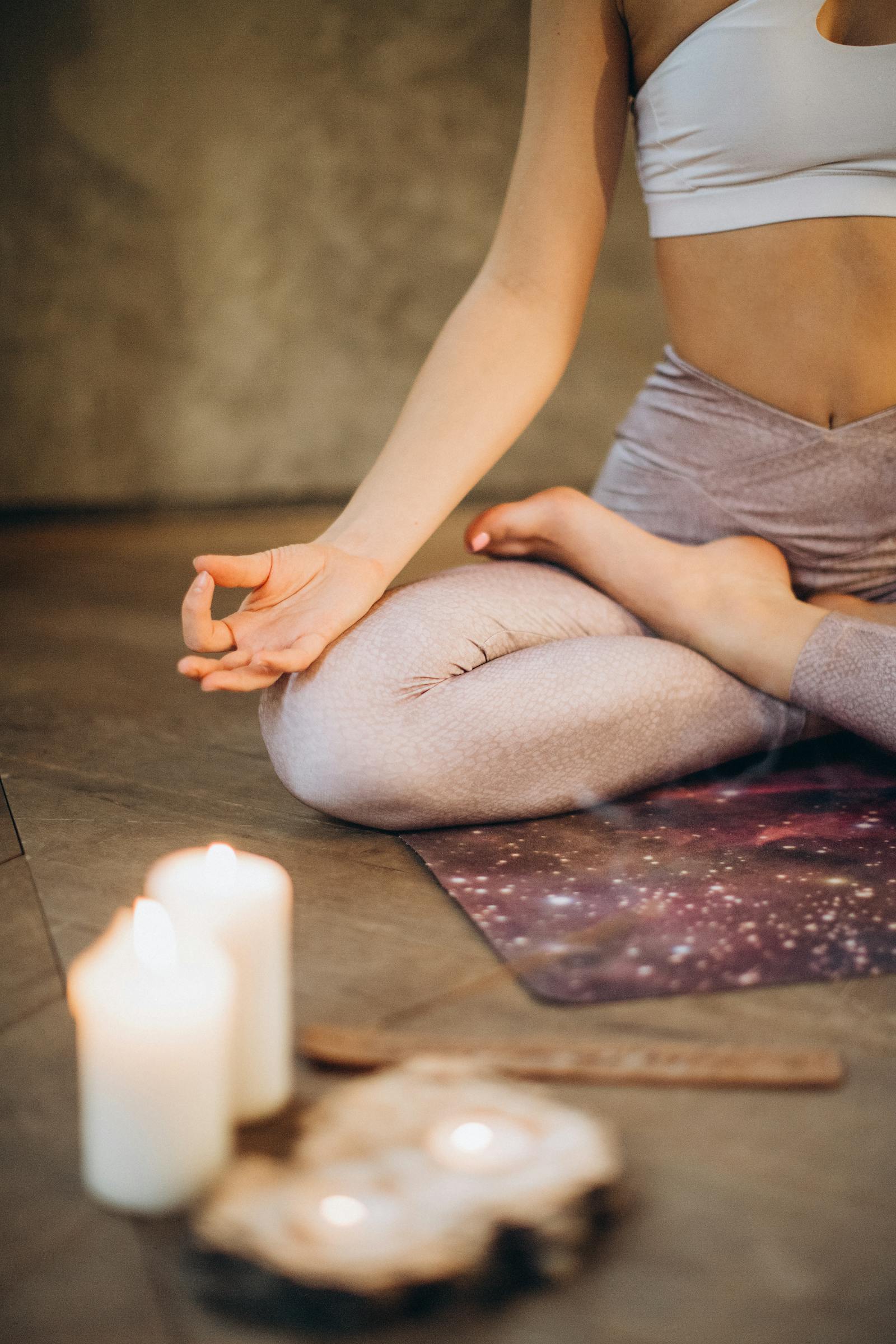
Guided and silent meditation aren't competing methods — they're different tools suited to different situations and different stages of practice. Knowing when each one serves you better is more useful than deciding one is categorically superior.
What guided meditation actually offers
A facilitator's voice provides continuous structure — instructions, prompts, sometimes a narrative or visualization to follow. This external structure does real work for a wandering mind: instead of needing to generate your own focus from nothing, you're following along, which lowers the barrier to staying present.
What silent meditation actually offers
No external voice, no structure beyond what you bring yourself. This demands more self-direction but also allows a depth of stillness that guided meditation, with its continuous verbal input, doesn't fully permit. Silence creates space for whatever arises, without being channeled toward a specific prompt or theme.
Why beginners usually do better with guidance
A completely silent, unstructured sit can feel overwhelming for someone new to meditation — with nothing to anchor attention, the mind tends to wander extensively, and many beginners give up quickly out of frustration. Guided meditation provides scaffolding that makes early practice more approachable and less discouraging.
Why experienced practitioners often prefer silence
Once the basic skill of sustained attention is established, guided meditation's constant verbal input can start to feel like a limitation rather than a help — it structures the experience toward a particular outcome, where unguided silence allows practice to go wherever it needs to on a given day. Many practitioners gradually shift from guided to silent practice as a sign of progress, not because guided practice becomes wrong, but because it becomes less necessary.
It's not strictly a beginner-to-advanced progression
Even experienced practitioners use guided meditation regularly — for specific purposes (a particular visualization, a themed practice like release or gratitude) that silent sitting doesn't easily provide. And some beginners, particularly those with naturally focused temperaments, take to silent practice quickly. The beginner-to-silent progression is common but not universal.
How to decide which to use on a given day
- Feeling scattered or new to practice? Guided meditation offers useful structure
- Wanting depth, or working through something specific without a predetermined direction? Silent practice allows that space
- Short on time and need quick reorientation? A brief guided practice is often more efficient than unstructured silence
- Processing something that doesn't fit a predetermined prompt? Silence lets it unfold on its own terms
How this shows up at a retreat
Retreat sessions typically blend both — guided group meditations during structured sessions, with genuine unstructured silent time built into the schedule (by the lake, in quiet meditation corners) for guests who want it. Neither format is imposed exclusively; the structure accommodates both depending on what a given moment calls for.
Ready When You Are
Want to experience both formats within a guided retreat structure? See what a typical retreat day includes or explore Raja Yoga and meditation.