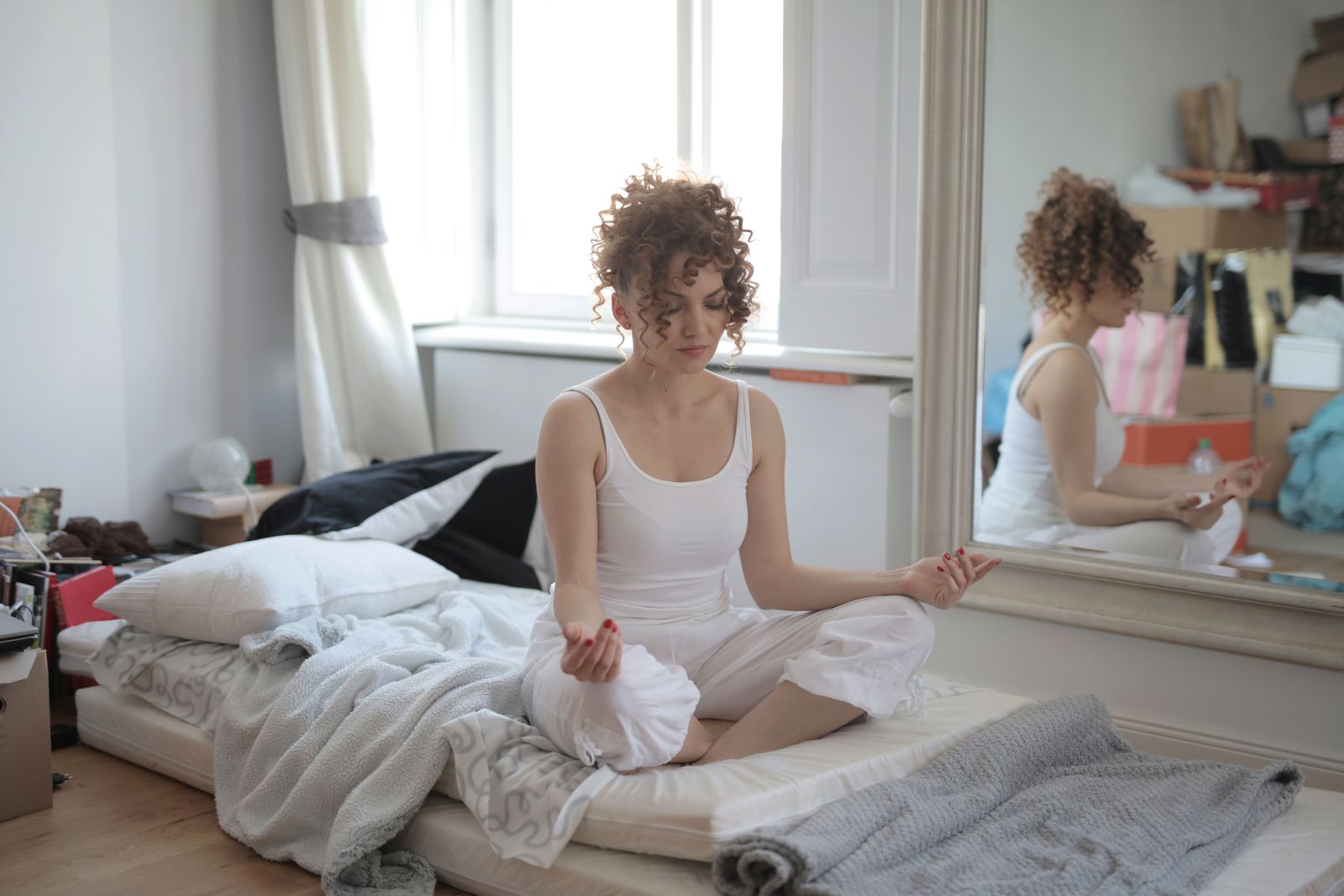
Raja Yoga — often translated as "royal yoga" — is the path most closely associated with what people typically picture when they hear the word meditation. Where Karma works through action, Bhakti through devotion, and Jnana through intellectual inquiry, Raja works directly on training the mind itself.
What Raja Yoga actually trains
The tradition describes this path through eight progressive limbs (Ashtanga, not to be confused with the physical Ashtanga yoga style) — ethical guidelines, physical postures, breath control, sense withdrawal, concentration, meditation, and ultimately a state of absorbed stillness. In practice, most modern engagement with Raja Yoga focuses on the meditation and concentration components specifically, as a direct method for training a scattered, reactive mind into a calmer, more focused one.
Why it's called the most "direct" path
Karma, Bhakti, and Jnana all work indirectly — through action, feeling, or intellect — toward the same underlying stillness. Raja Yoga trains the mind's capacity for stillness directly, through repeated practice of concentration and meditation, without needing an intermediary like devotion or service to get there. This directness is also what makes it demanding — there's no external structure (a task, a ritual, a question) to hold your attention; it's purely internal discipline.
What a Raja Yoga-style meditation session looks like
Typically: a comfortable seated posture, a specific object of concentration (breath, a mantra, a candle flame, a fixed point), and a sustained effort to keep returning attention to that object whenever it wanders — which it will, repeatedly, especially for beginners. The practice isn't about achieving a thought-free state immediately; it's about training the muscle of returning attention, over and over.
Why beginners often find this path frustrating at first
Unlike Karma Yoga (where you have a task to focus on) or Bhakti (where devotion gives you something to feel), Raja Yoga's raw concentration practice can feel unproductive at first — your mind wanders constantly, and there's no external structure distracting you from noticing that. This frustration is a normal, expected part of the practice, not a sign you're doing it wrong.
A simple starting practice
Sit comfortably for five minutes, focus attention on the sensation of breath at the nostrils, and gently return attention there every time you notice it's wandered — without judgment, just redirection. Do this daily for a week before expecting any noticeable shift; concentration is a trained capacity, not an instant switch.
How this fits into a retreat
Meditation sessions throughout a retreat draw directly on Raja Yoga's core practice — training attention and cultivating stillness — often made more accessible by the retreat's setting (nature, reduced distraction, a supportive group) than a typical home practice would be.
Ready When You Are
Want to build a meditation practice as part of a guided retreat? See what's included in a typical retreat day or explore the four paths of yoga overall.