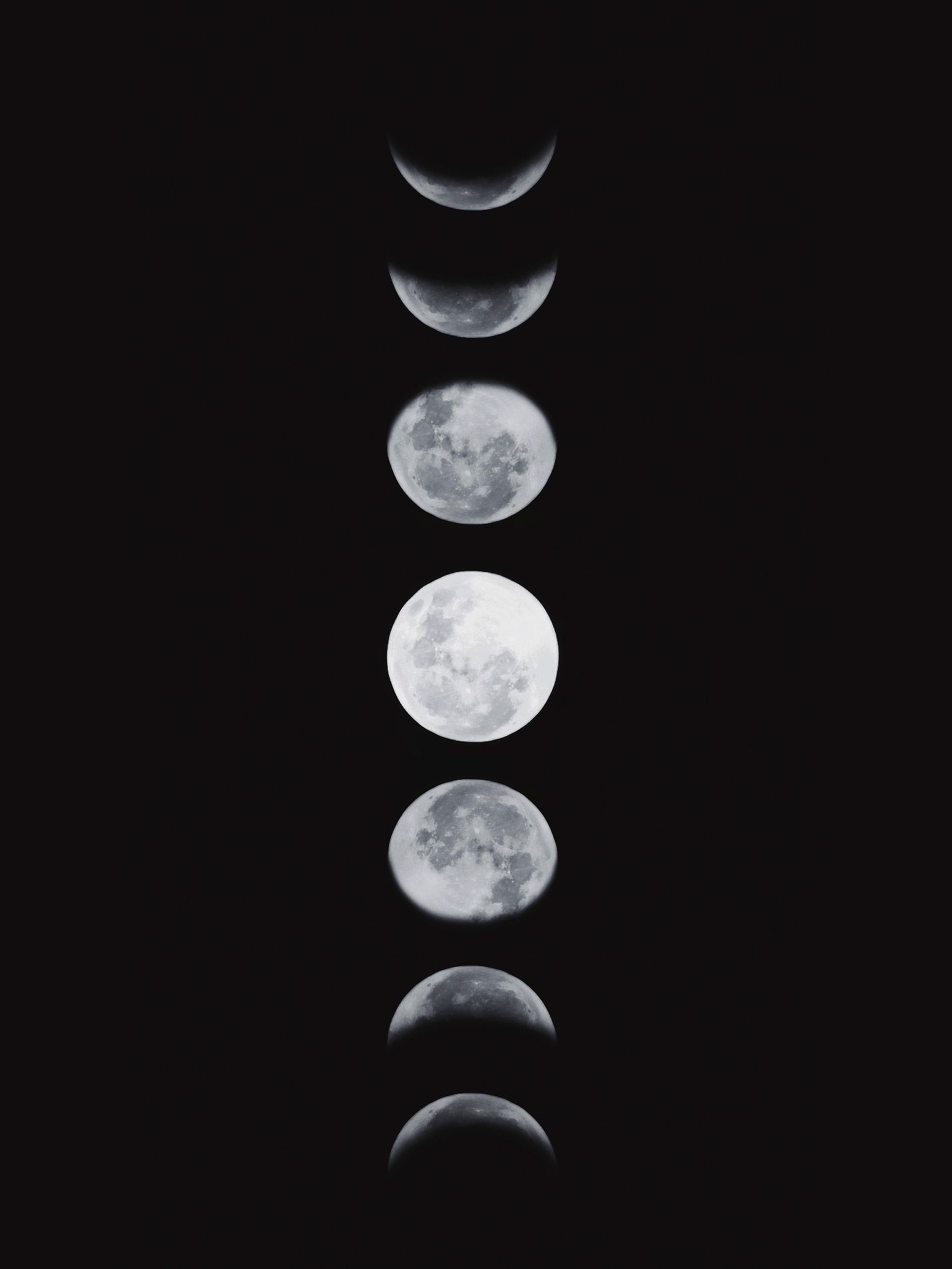
Stripped of any belief system, the moon's cycle is simply a recurring, visible marker of time passing — roughly 29.5 days, new to full and back again. What intentional living practices do with that marker is use it as a built-in checkpoint, so reflection doesn't only happen when life forces it on you.
Why a recurring marker actually helps
Most people's intentions and reflections happen reactively — after a crisis, a birthday, a New Year. The problem with relying only on those moments is that they're either too rare or too loaded with pressure to be useful day-to-day. A shorter, recurring cycle like the lunar month gives you a checkpoint roughly twice a month (new and full) that's frequent enough to matter but not so frequent it becomes noise.
A simple way to use the cycle
- New Moon: a natural point to set an intention — something specific you want to move toward over the coming weeks
- Waxing phase: the stretch where you're building toward that intention, ideally checking in briefly rather than forgetting about it entirely
- Full Moon: a natural point for release and reflection — what's shifted, what you're ready to let go of, what the last two weeks have shown you
- Waning phase: a quieter stretch, often better suited to integration and rest than starting something new
You don't need to believe anything specific for this to work
This isn't dependent on astrology or any particular tradition — it works simply as a structure, the same way a weekly planning ritual or a monthly review works for some people. The moon's advantage is that it's visible and doesn't require an app or a calendar reminder; you just look up.
How this connects to a Full Moon retreat
A Full Moon retreat essentially takes this everyday practice and gives it a concentrated, immersive form — instead of a quiet five-minute reflection at home, you get days of breathwork, movement, and community building toward a single, deliberate release ritual. For people who've never tried intentional living through moon cycles before, a retreat is often the moment the practice actually clicks, because the structure is held for you rather than something you have to maintain alone.
A small practice to start with, no retreat required
Pick the next Full Moon (a quick search will tell you the date). A few days before, spend ten minutes journaling on what you're ready to release. On the night itself, reread what you wrote, and consider one small physical act — closing the notebook deliberately, saying it aloud once — to mark it as complete. That's the entire practice, and it costs nothing beyond attention.
Ready When You Are
Want to experience this as a guided, immersive practice? Join a Full Moon Gathering or explore a full retreat built around the cycle.