Your mind can negotiate with exhaustion. Your body usually cannot.
You can tell yourself you are fine while your shoulders stay raised all day. You can call it a busy week while your breathing becomes shallow. You can say you will rest later while your sleep becomes lighter and your patience becomes shorter.
The body keeps a different record.
This is why yoga begins somewhere remarkably simple: sensation.
Not achievement. Not flexibility. Not a perfect pose. Sensation.
Can you feel where you are holding tension? Can you notice the breath without changing it? Can you tell the difference between effort and strain?
In everyday life, attention is usually directed outward. Messages. Screens. Meetings. Traffic. Other people's needs.
Yoga reverses the direction. For a few moments, attention comes home.
That does not mean every sensation is a diagnosis or every discomfort has a mystical meaning. It simply means that the body is giving you information—and learning to notice information is a valuable skill.
Breath is especially revealing.
When attention becomes scattered, breathing often becomes something we barely notice. Deliberate breathing practices can create a simple anchor: inhale, exhale, notice.
The point is not to force calm. The point is to become aware.
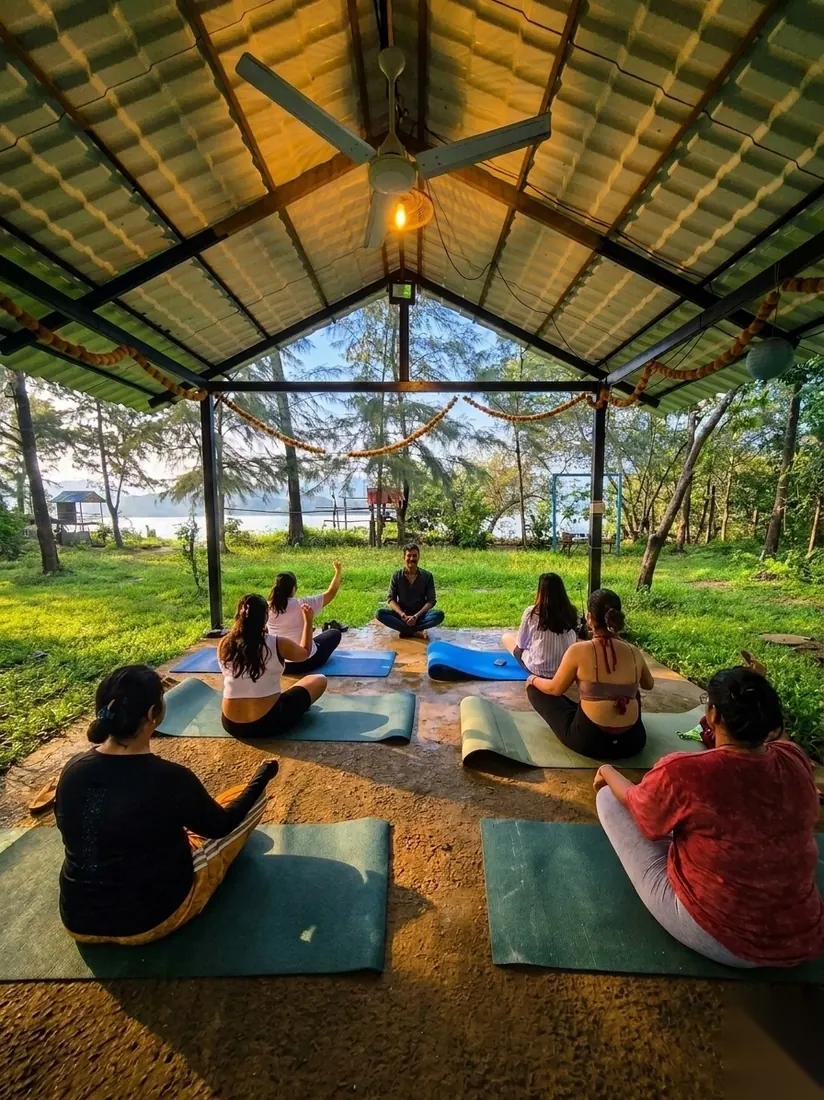
A retreat creates repeated opportunities for this awareness. You wake. You move. You breathe. You eat. You walk. You sit. You sleep.
Ordinary activities become opportunities to notice yourself.
And eventually something interesting happens.
You stop asking, “How do I make myself feel better right now?”
You begin asking, “What is my body telling me?”
That is a very different question.
Reflection
Before reaching for your phone today, take three slow breaths and notice your jaw, shoulders and belly. Don’t change anything. Just observe.
Inward Action: a retreat designed around yoga, meditation, breath, nature, and self-inquiry.
Explore the Retreats